Reflections from SINAG: Rise & Reclaim
When the “Strong Ones” Finally Paused
There’s a kind of tired that’s hard to explain.
It’s not the kind where you just need sleep…but the kind where you’re still showing up: going to work, answering messages, taking care of people. And something in you just feels… drained. Quietly.
You don’t always talk about it, but you just keep going.
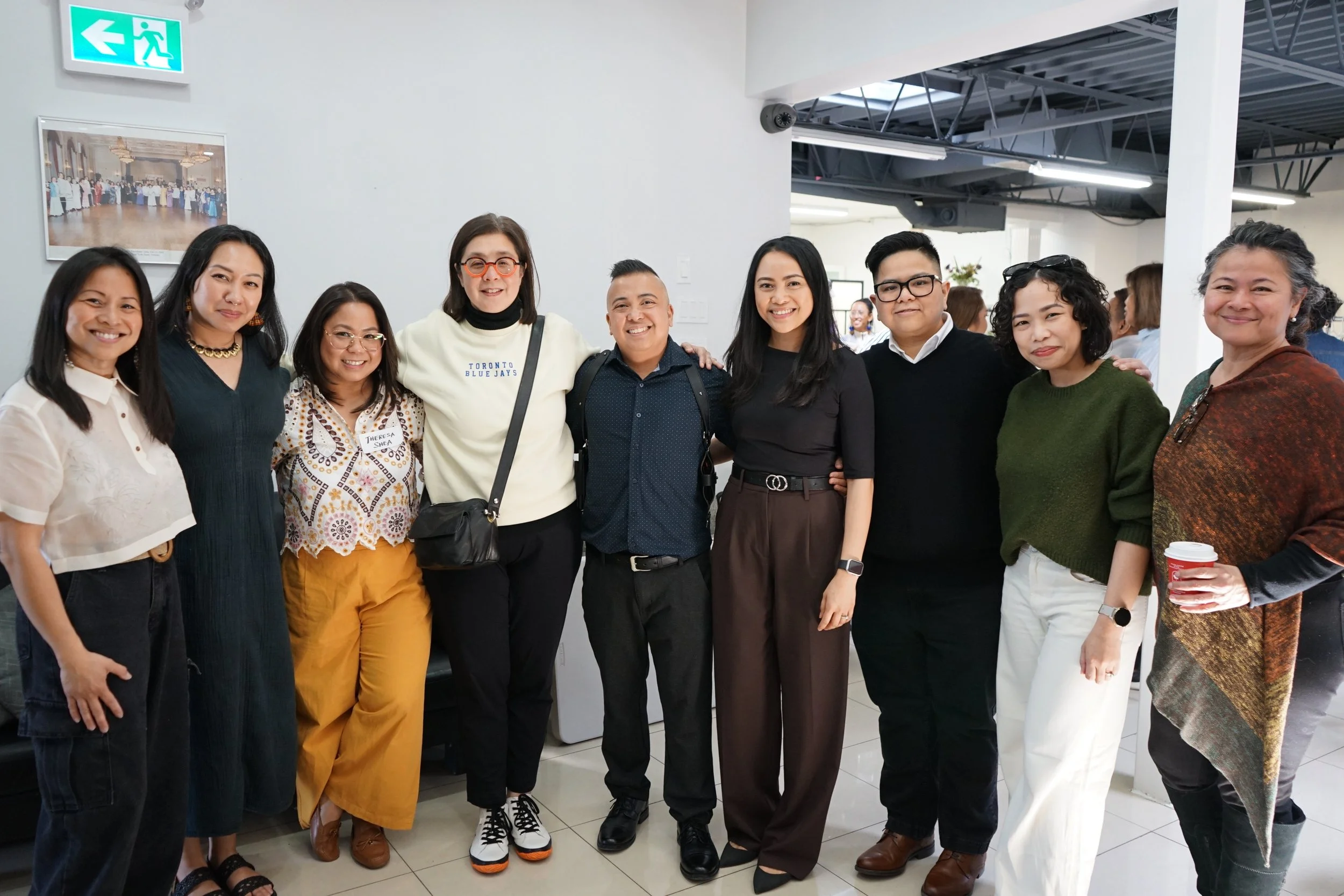
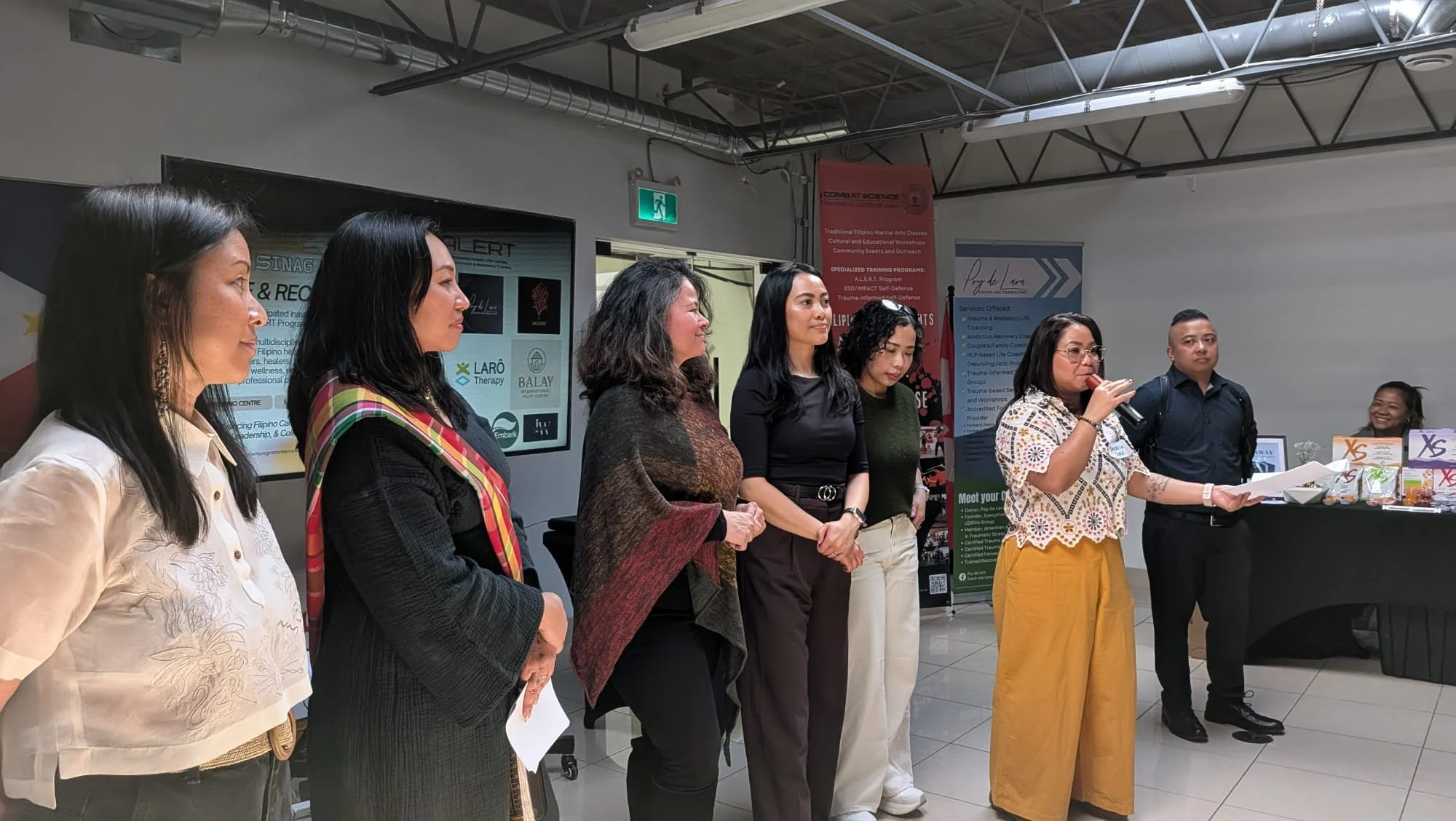
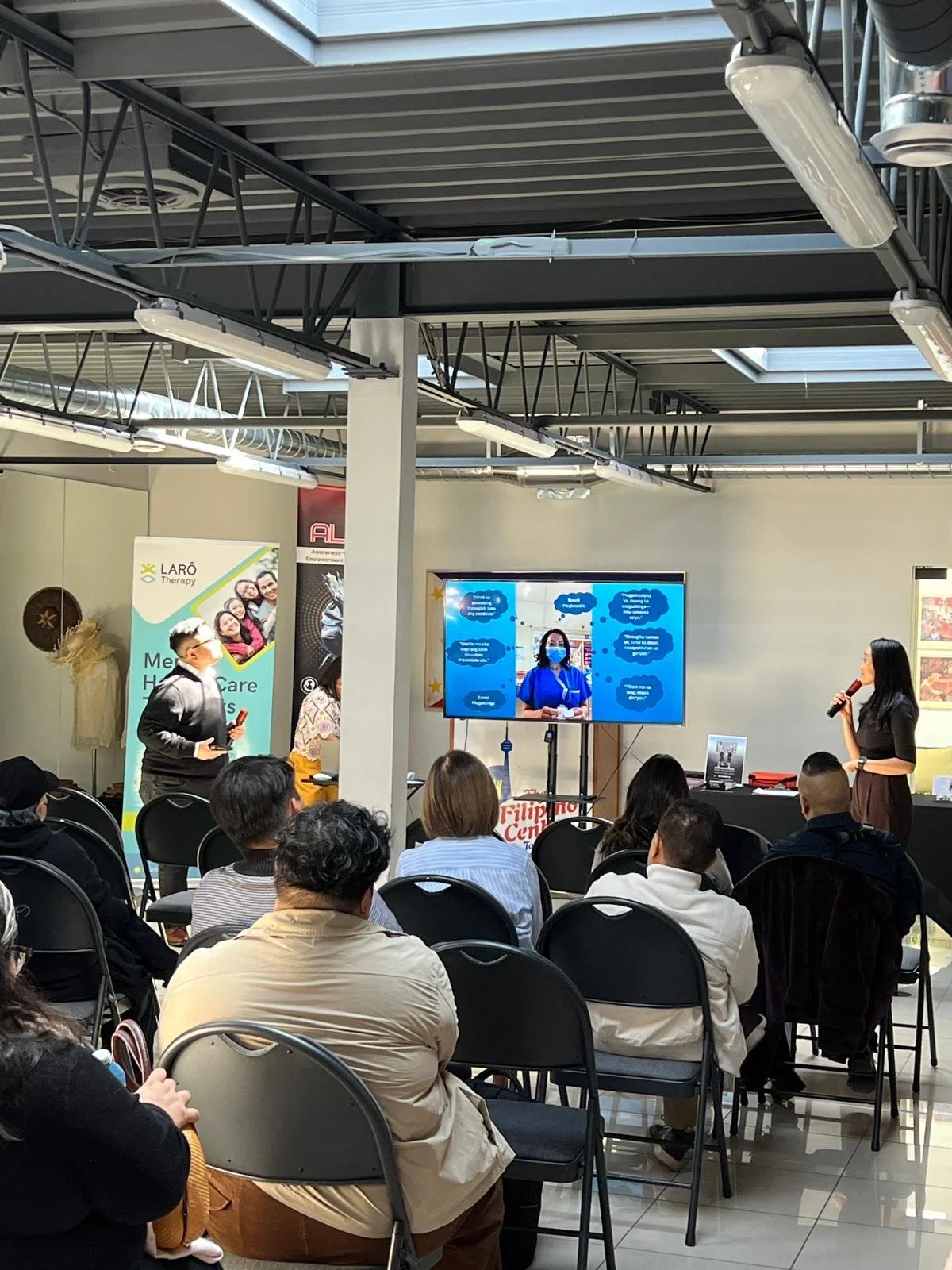
On April 26th, from 1:30 to 3:30 PM, we gathered at the Filipino Centre Toronto for SINAG: Rise & Reclaim, a wellness event created for Filipino caregivers, helping professionals, and community members who are used to being the “strong ones.”
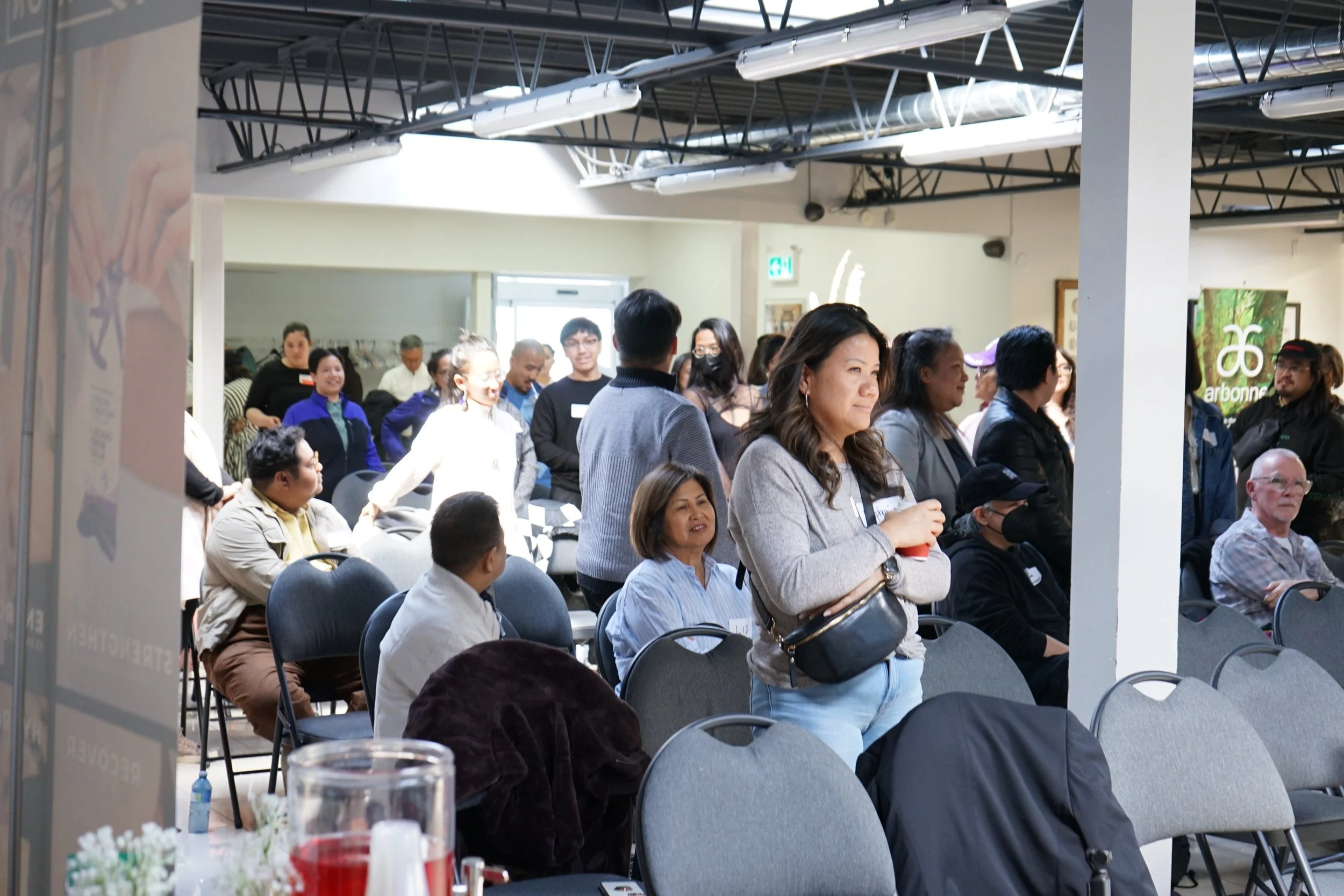
Before anything even started, you could already feel something different. People were slowly coming in. Grabbing coffee. Getting food. Walking around the vendor tables. Some people came alone, some came with friends.
There was a bit of that initial awkwardness… but also something else.
A kind of familiarity. Like, we don’t know each other yet, but we kind of do.
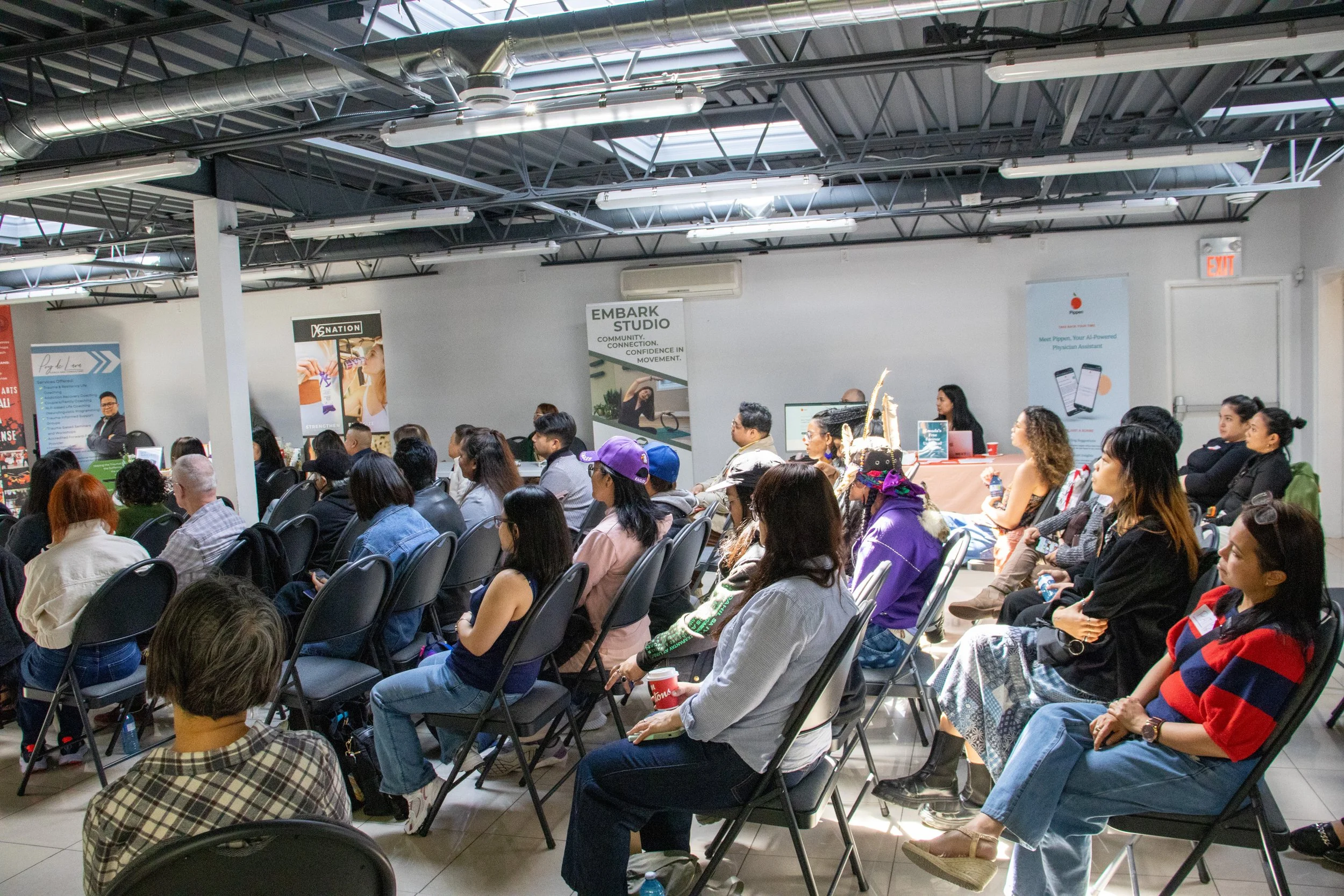
Little by little, more people came in, and eventually, the room just felt… full. Warm. Alive.
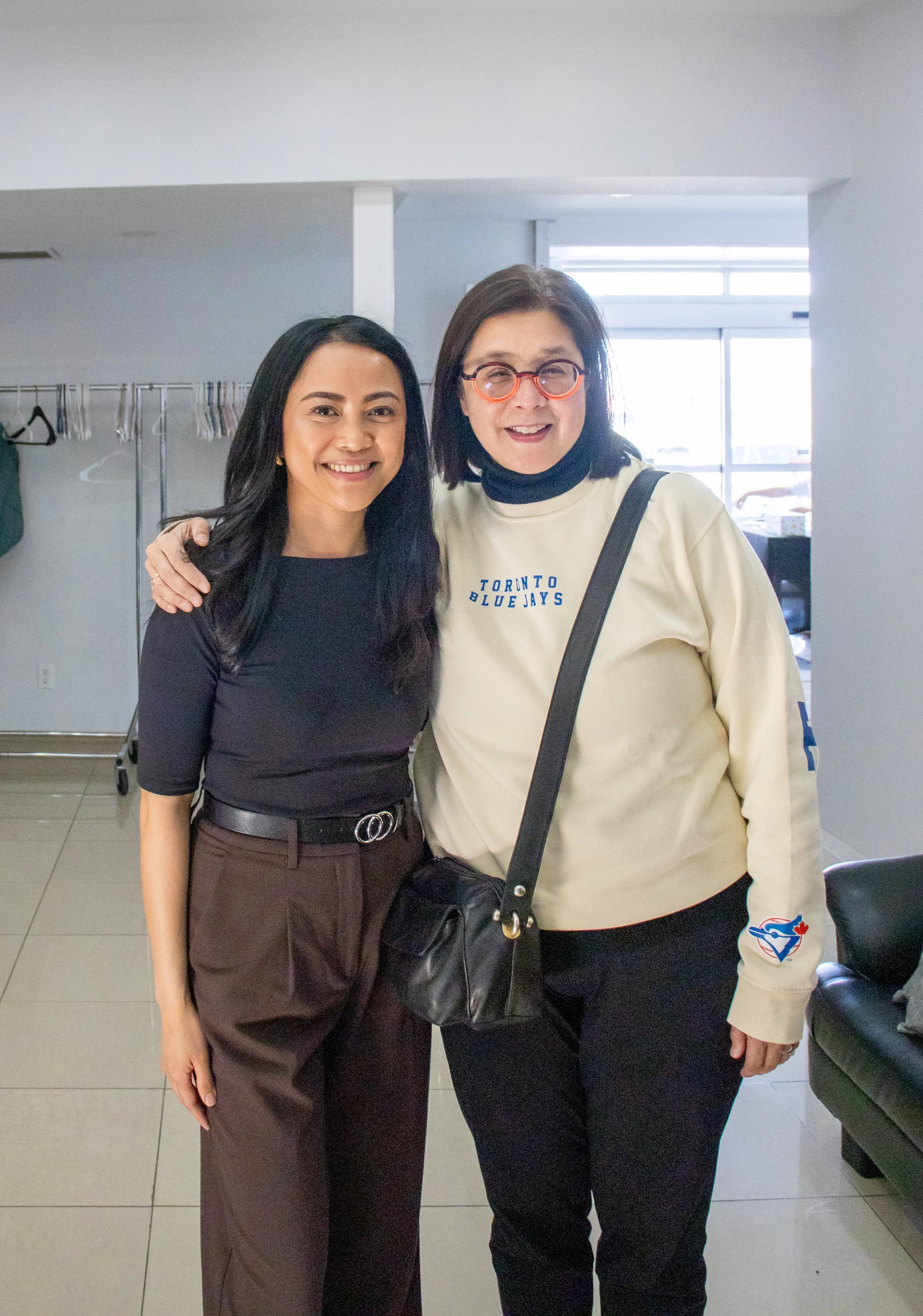
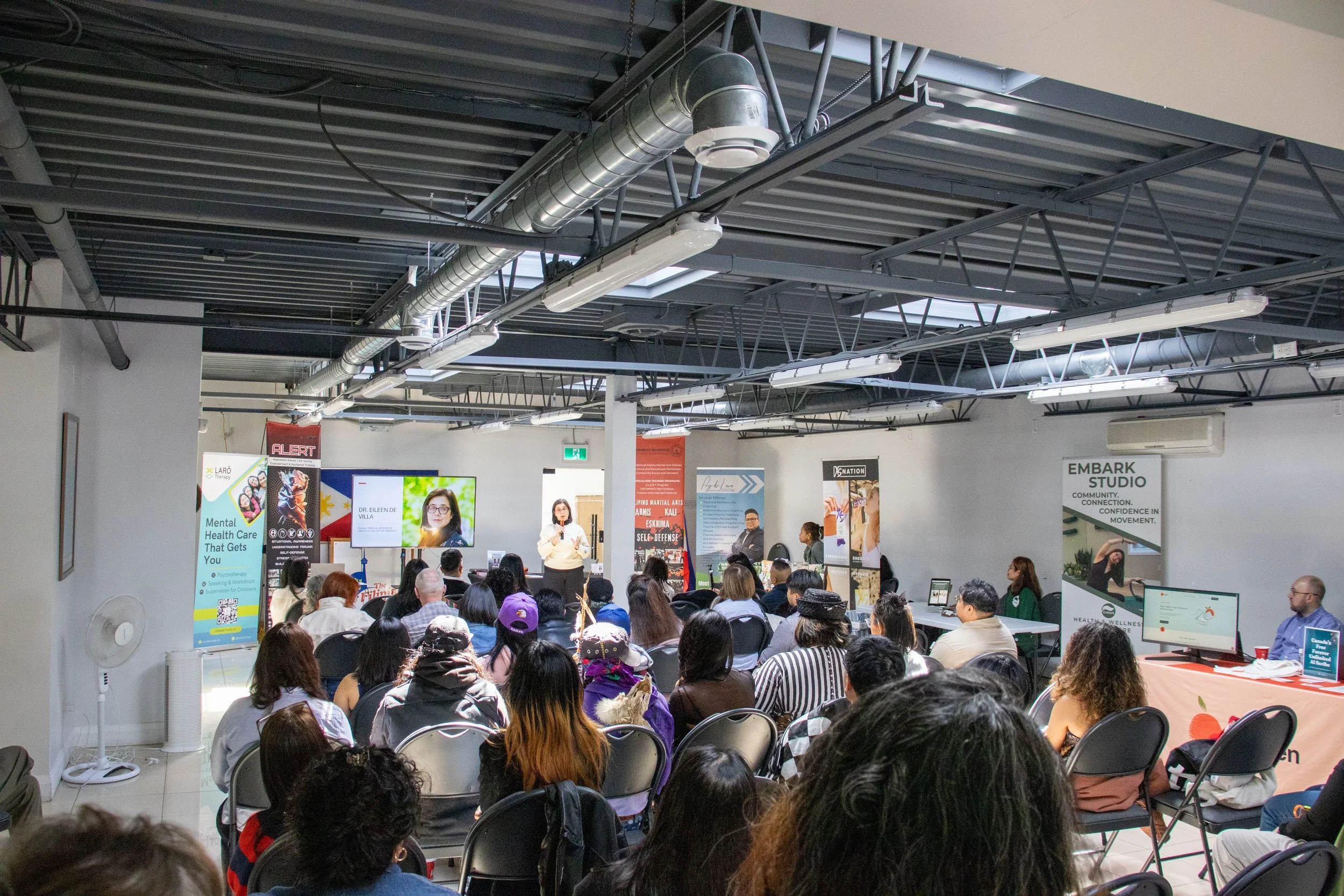
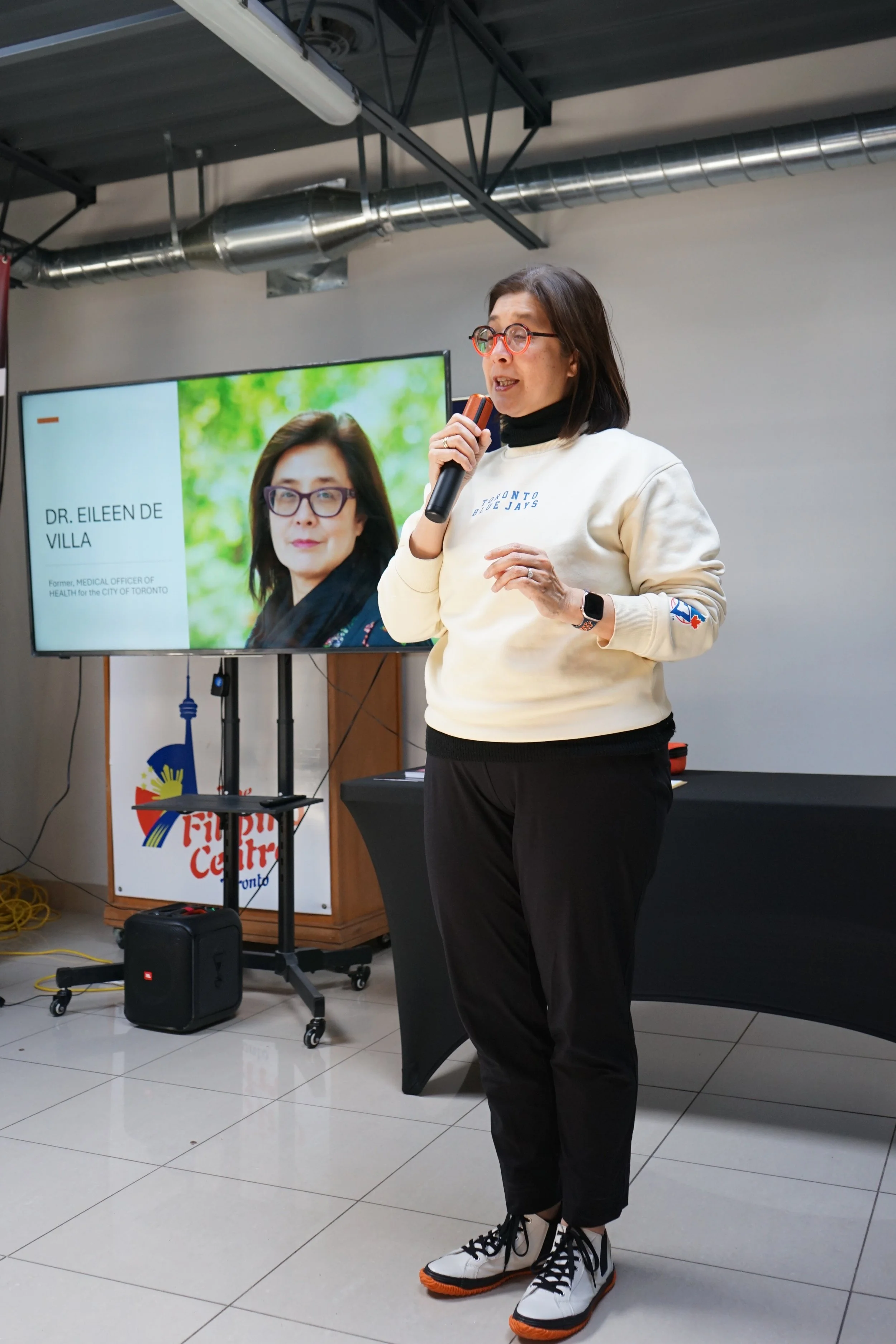
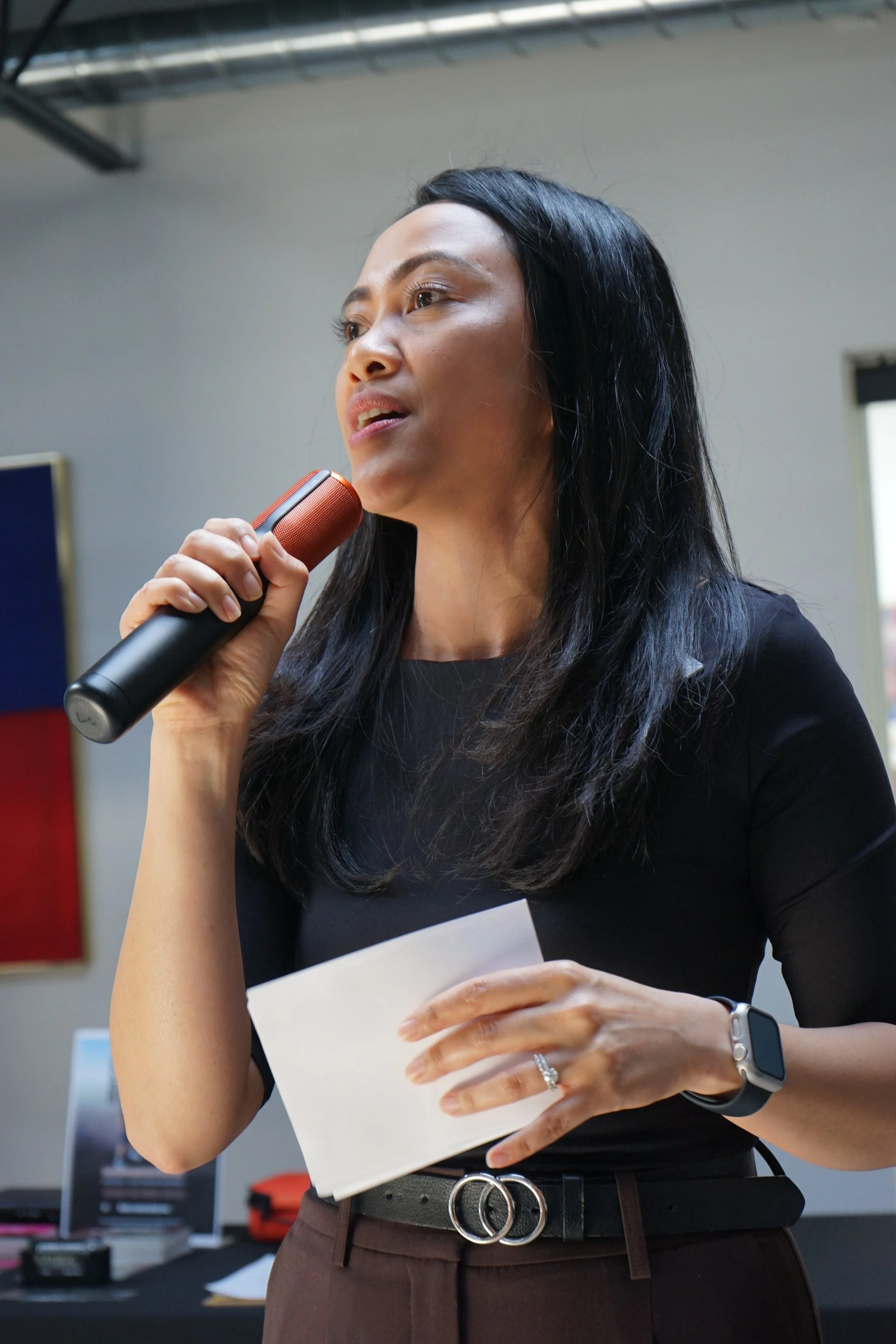
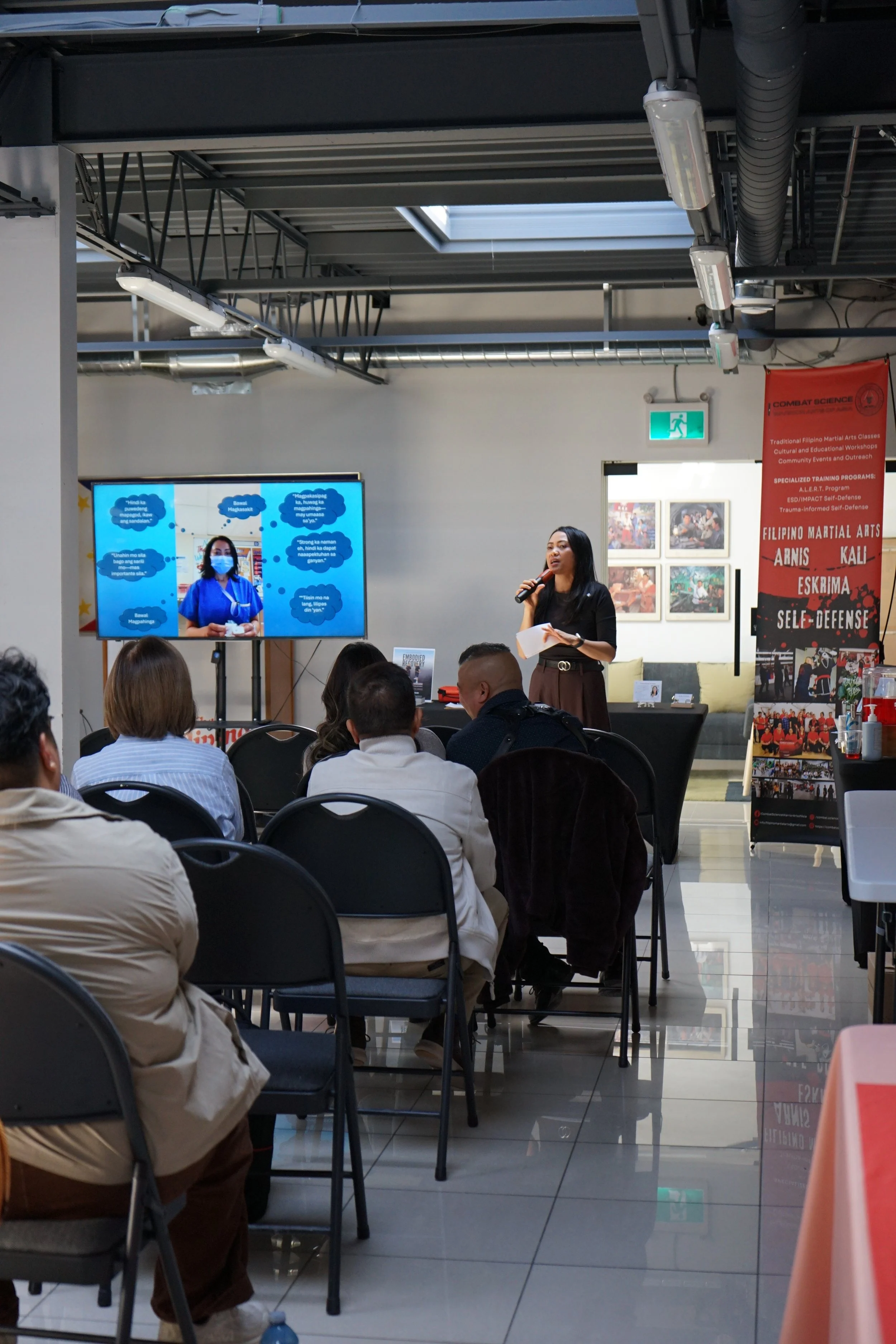
We were honoured to have Dr. Eileen de Villa open the event. She gave a warm welcome and shared how her parents were part of building the Filipino Centre. It was one of those moments that reminds you this space exists because people before us made it possible.
What struck me about Dr. Eileen de Villa's presence wasn't just her title or her role. It was what she represented.
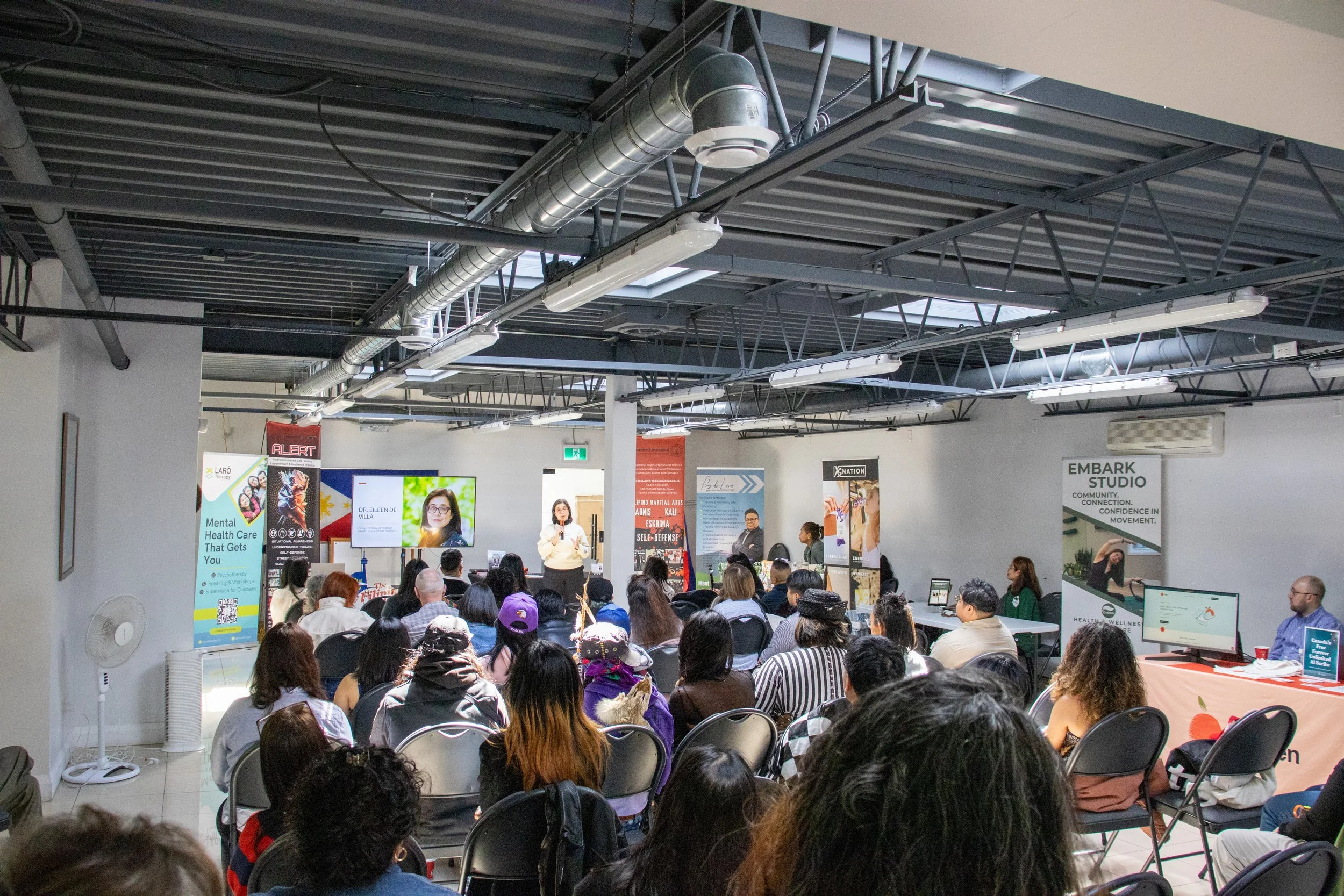
Dr. Eileen de Villa giving a warm welcome.
For many people in Toronto, Dr. de Villa became one of the faces of the pandemic. Day after day, she stood in front of cameras delivering updates during a time filled with uncertainty, fear, grief, and frustration. She was tasked with carrying difficult information, making impossible decisions with incomplete data, and speaking to a city that was looking for reassurance while also grappling with its own anxieties.
In many ways, she embodied something familiar to many Filipino caregivers and helping professionals: being the person who has to remain steady when everyone else is struggling.
As I listened to her speak, I found myself thinking about how often we celebrate people for being strong without ever asking what it costs them to carry that responsibility. We admire the nurse who works another shift. The caregiver who puts everyone else's needs first. The community leader who keeps showing up. The parent who sacrifices. The public health leader who guides a city through a crisis.
But strength is not free. And that, in many ways, is what SINAG is about.
MP Michelle Cooper wasn’t able to attend in person, but she sent a video message. And even that felt meaningful, like this work is reaching beyond just the room we were in.
We Started Talking About Things We Don’t Always Say Out Loud
A big part of the afternoon was just… naming things. Things we all feel, but don’t always say.
We talked about stress, but more than in a clinical way.
We spoke about:
Why do I feel like I can’t stop, even when I’m tired?
Why do I feel guilty resting?
Why does it feel like I always have to be “on”?
We talked about how stress shows up in real life:
overworking
people-pleasing
shutting down
feeling irritable and not knowing why
And how for many of us, especially in Filipino families and communities, this isn’t random.
We were taught to:
be strong “Magpakatatag ka, huwag kang tamad.”
not complain “Huwag ka puro reklamo. Kaya ng iba kaya kayanin mo din.”
be grateful “Magpasalamat ka nga eh may trabaho ka at nasa Canada ka. Yung iba dyan naghihirap.”
just push through “Magtiis ka lang, ganyan lang talaga yan.”
And to be fair… those things helped us survive. But no one really taught us what to do when our bodies start to feel the cost of that.
The Shift: It’s Not Just in Your Head
At some point, you could feel a shift in the room. That moment when people realize:
“Oh… this isn’t just me.”
We talked about how stress isn’t just something you think your way out of. It lives in your body.
And understanding it is one thing, but actually feeling different is another. This part felt really important because we didn’t just keep talking.
We paused, reflected, and moved our bodies too.
Through self-compassion, gentle touch, movement, play, and traditional practices like hilot and ancestral remembrance… the energy in the room softened.
You could see it happening in real time.
People who came in tense… started to relax.
People who were guarded… softened a bit.
Some closed their eyes, even in a room full of others.
That’s not something we’re used to doing.
Especially not together.
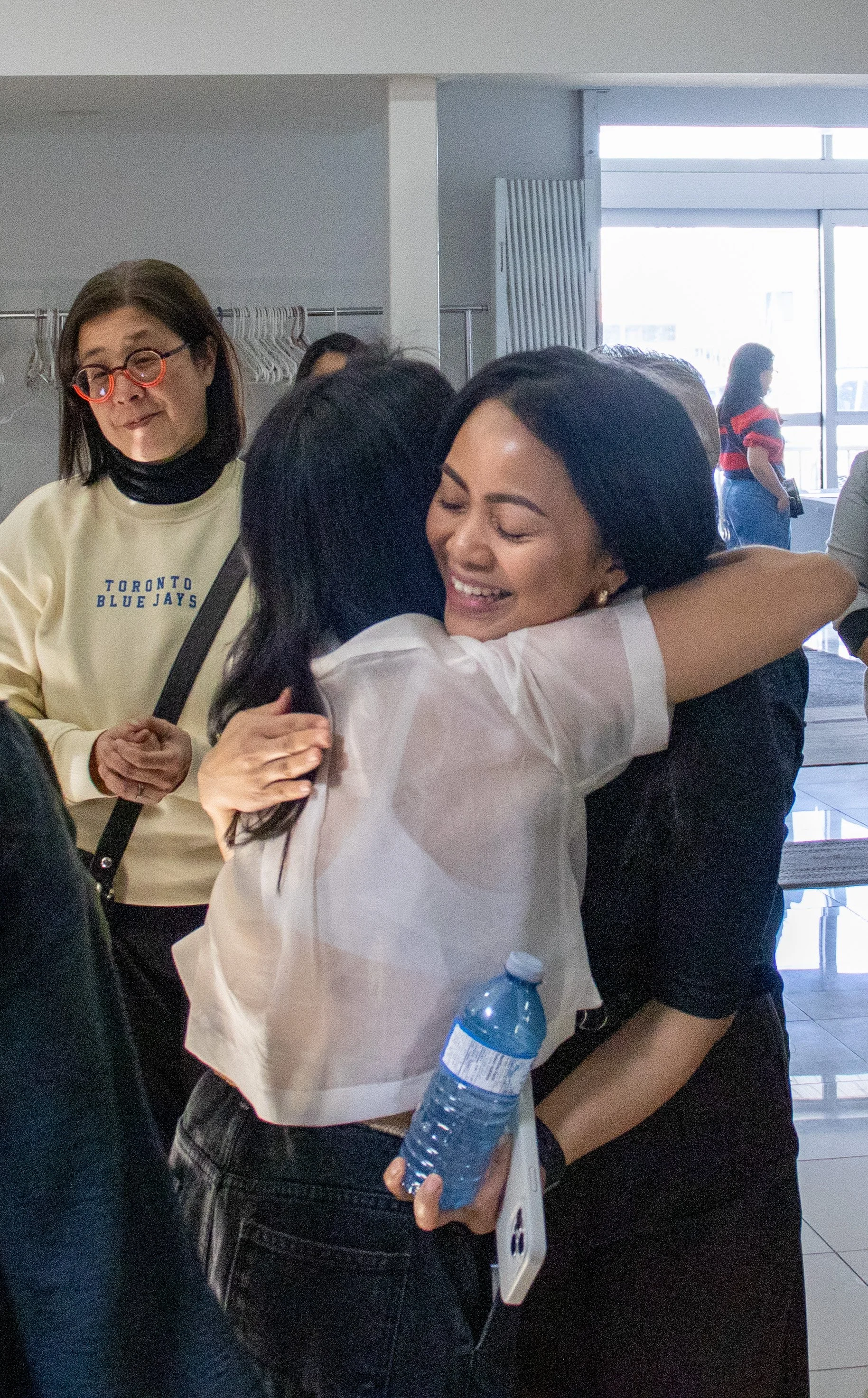
Understanding Why We Push Through
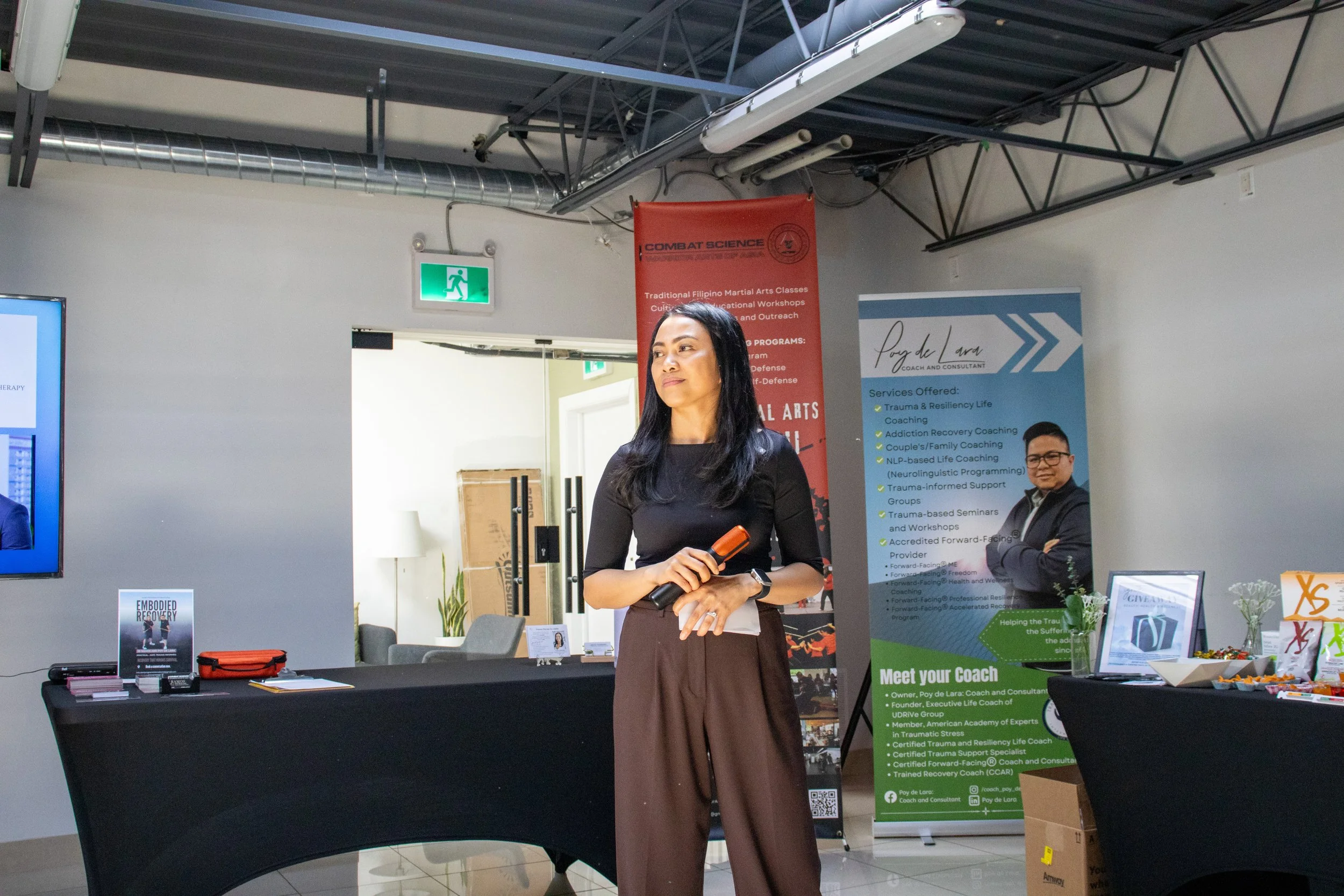
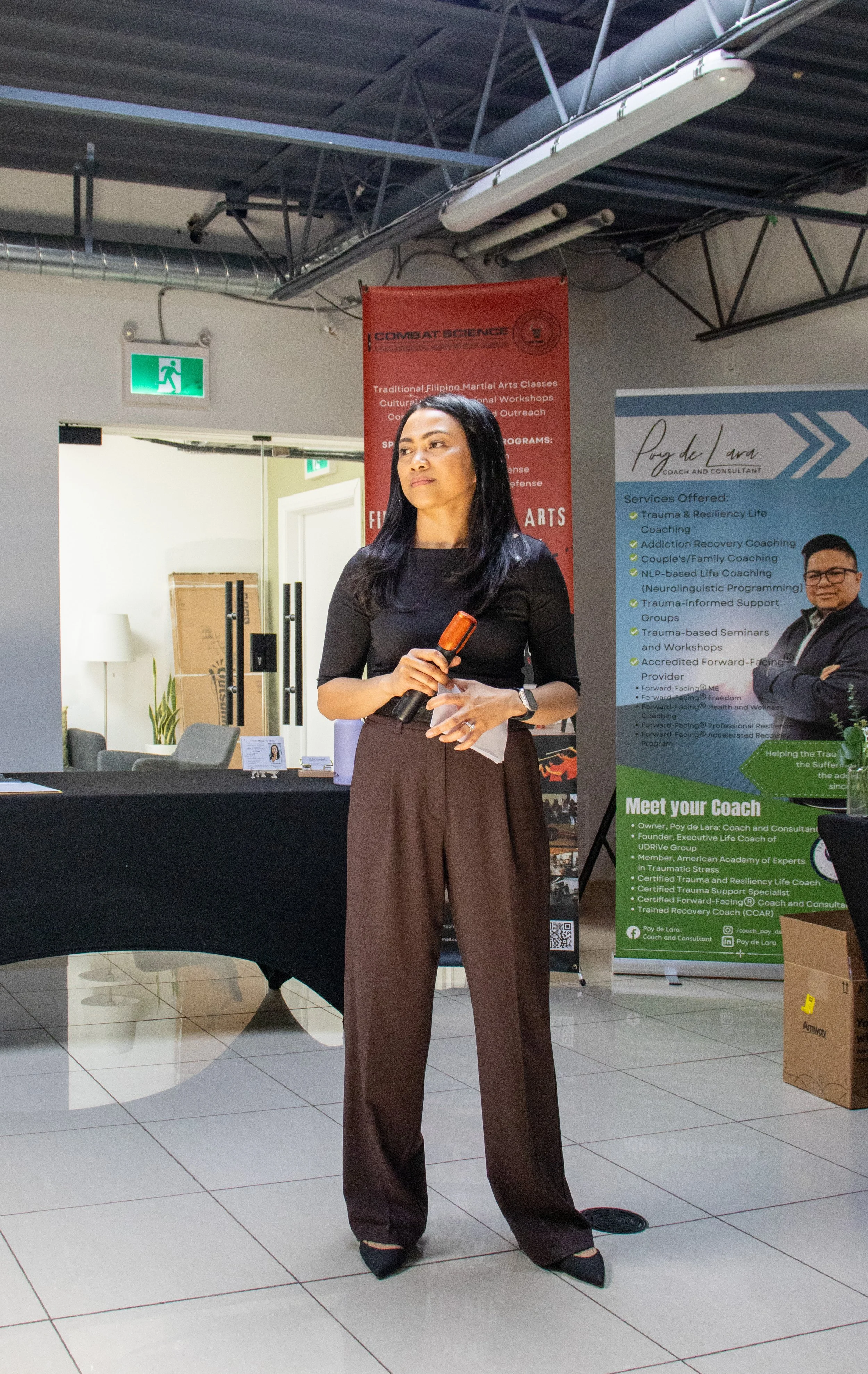
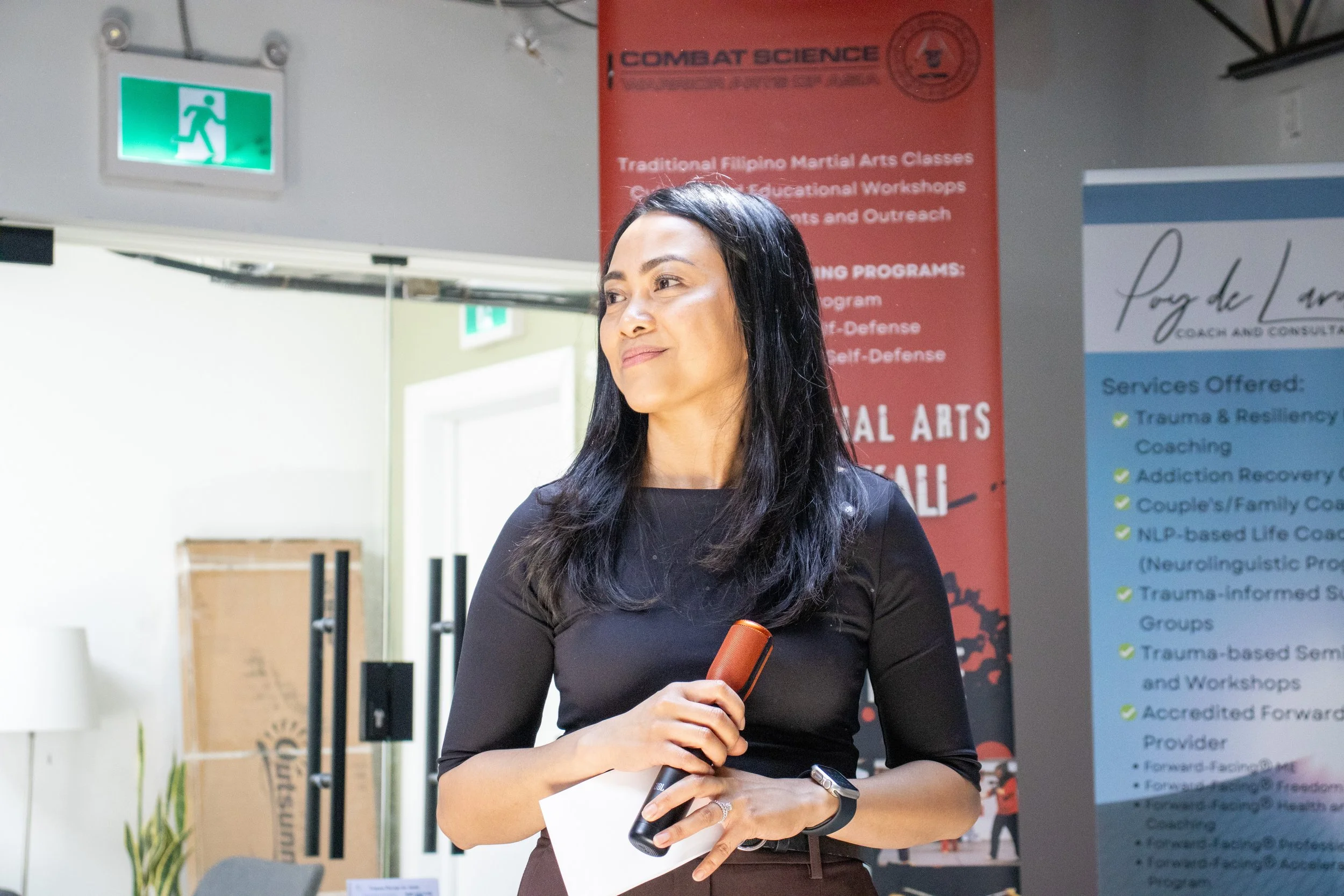
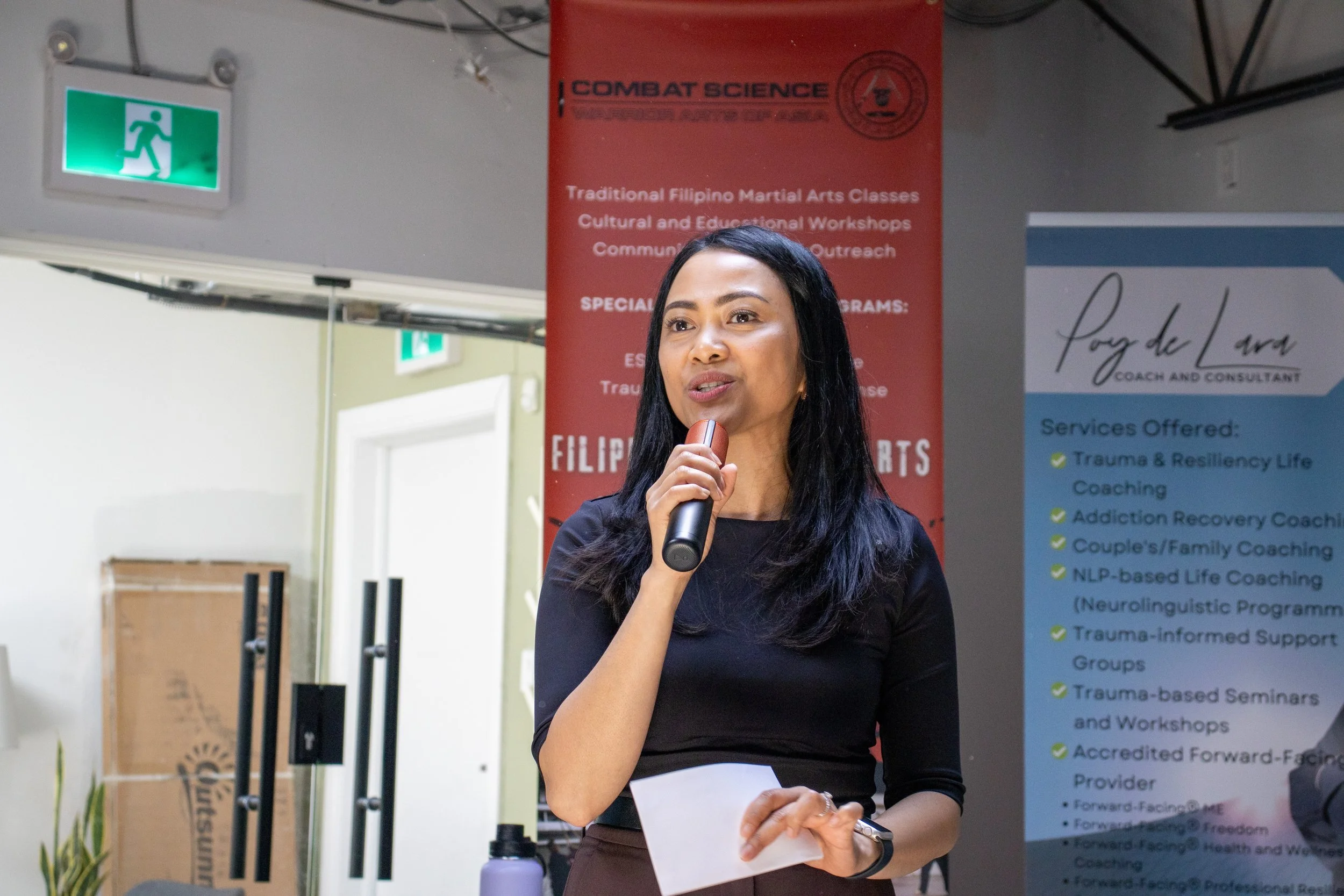
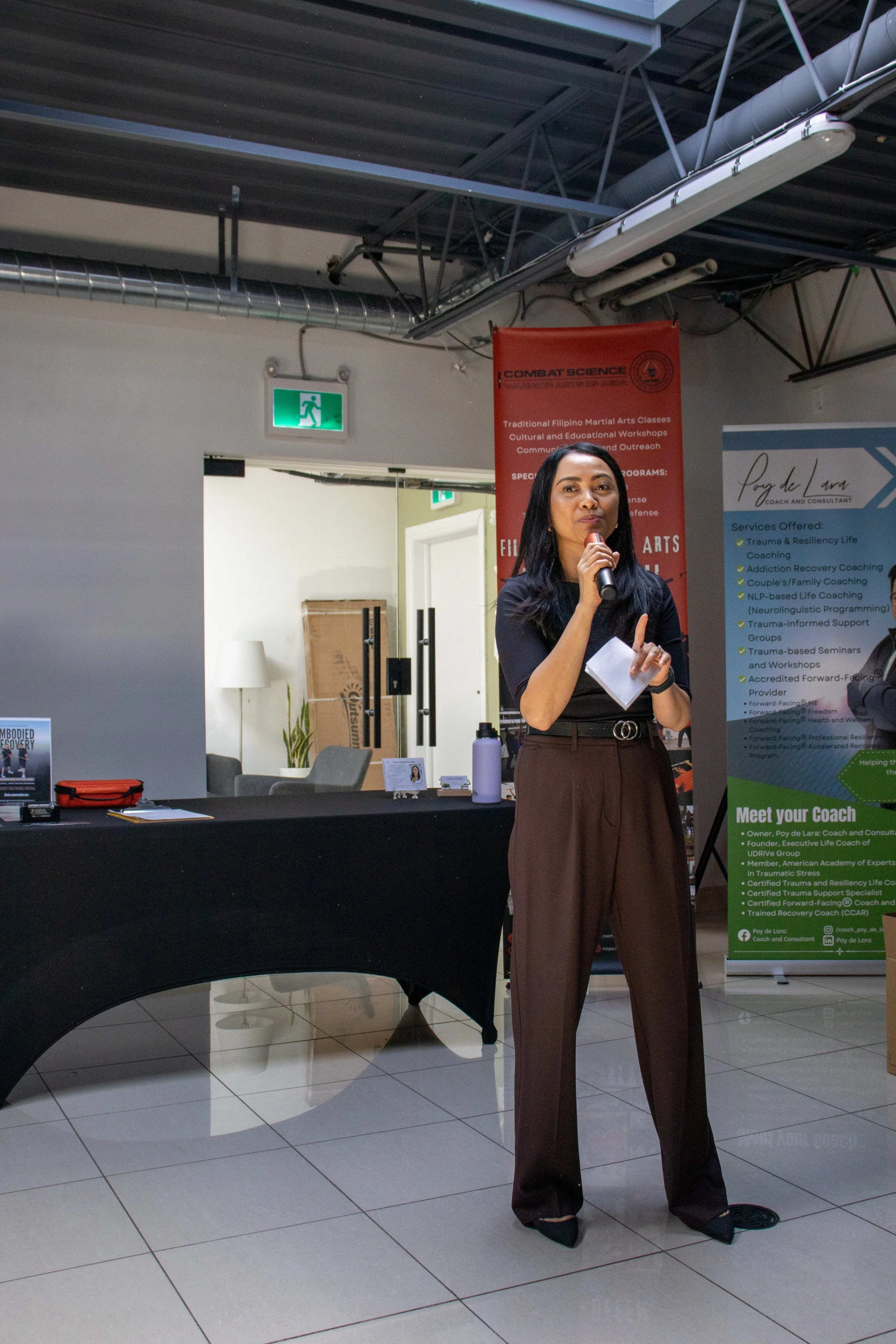
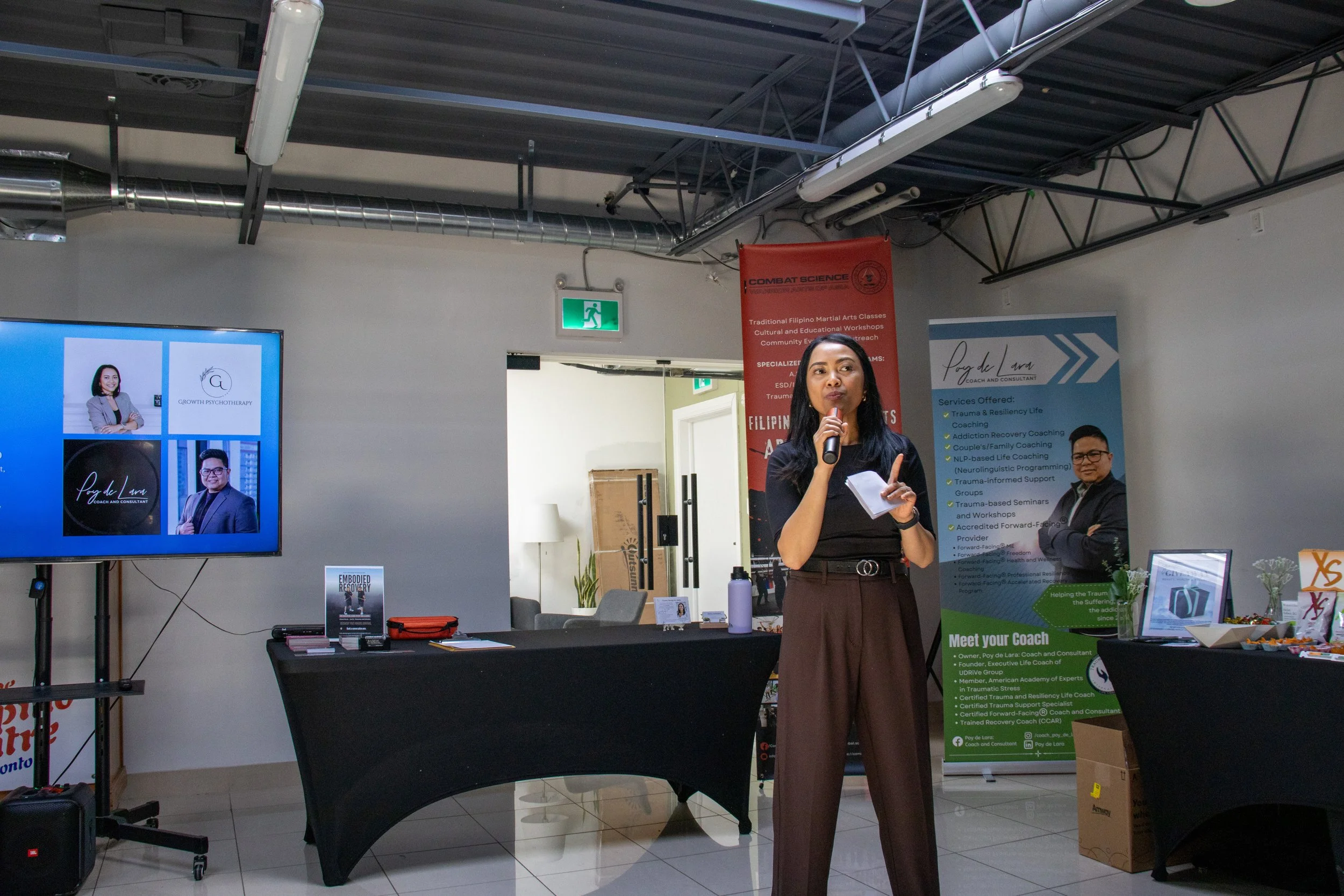
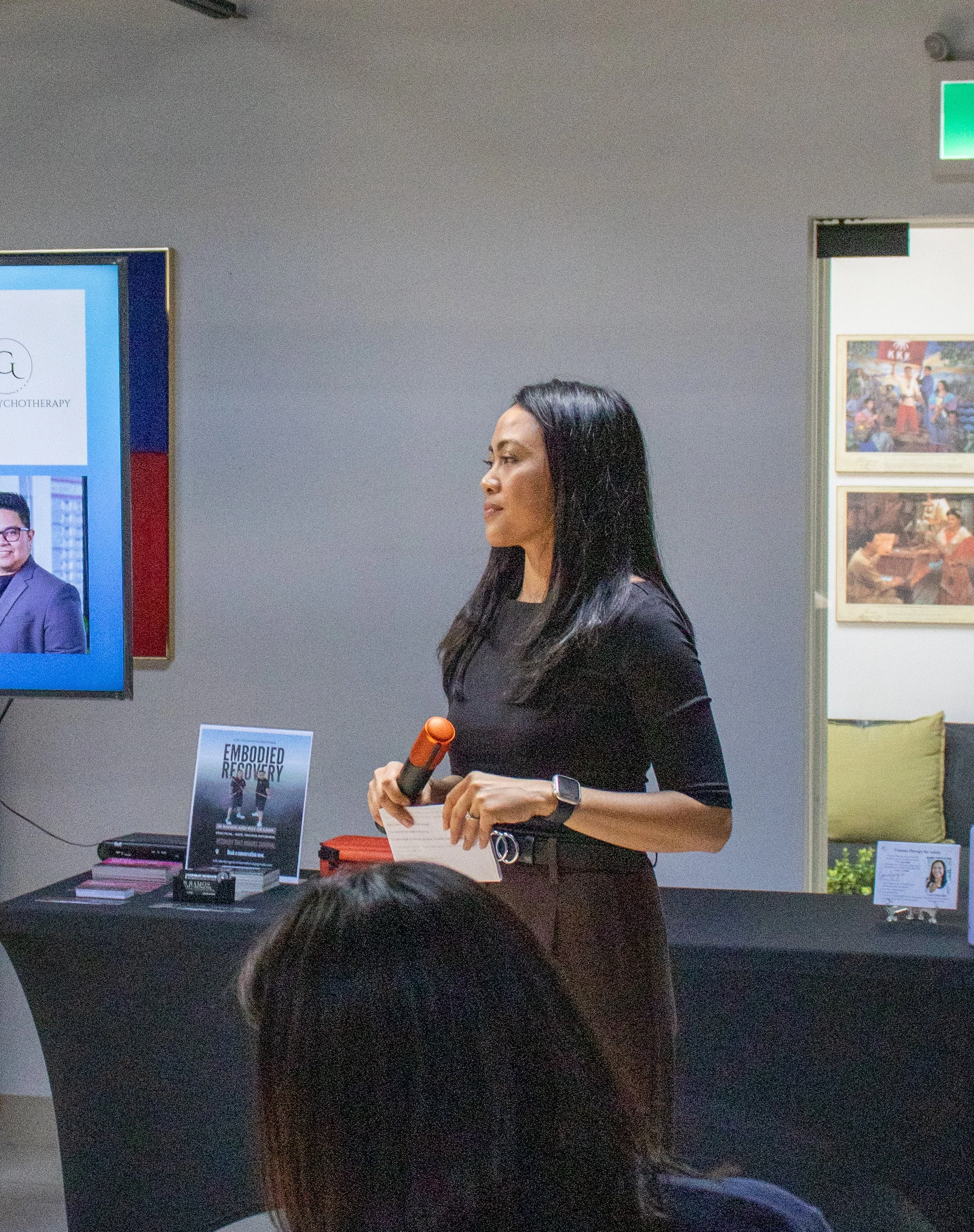
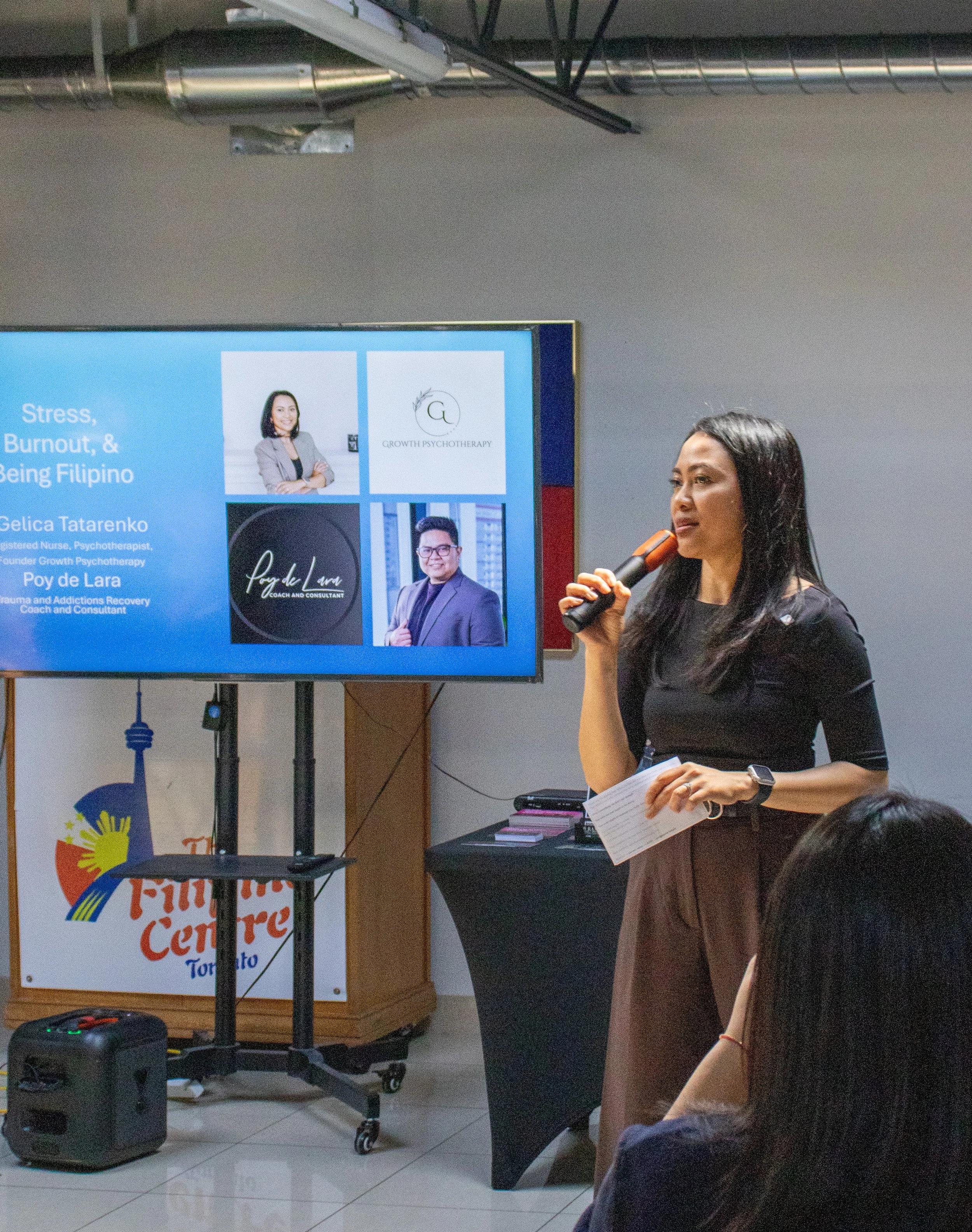
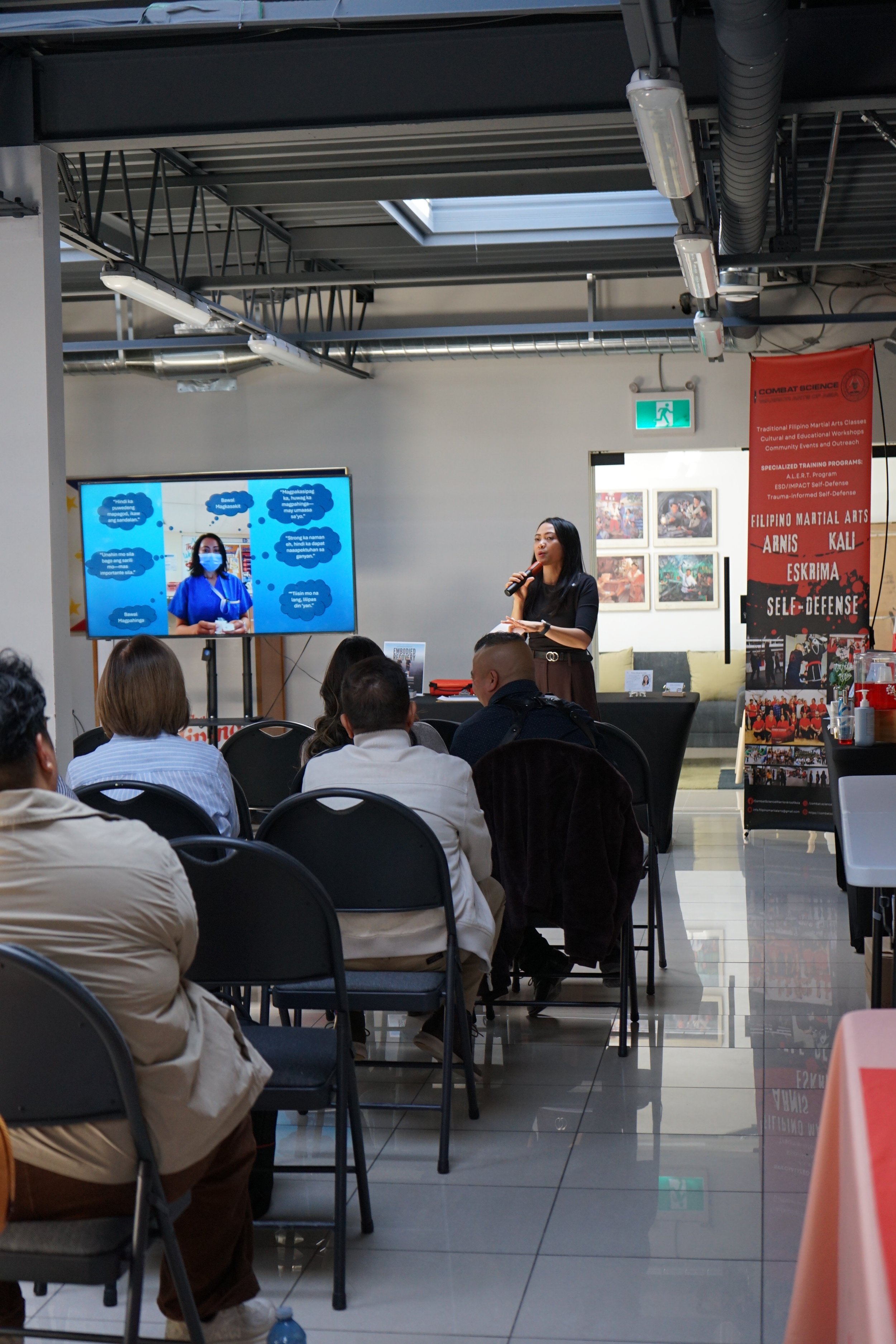
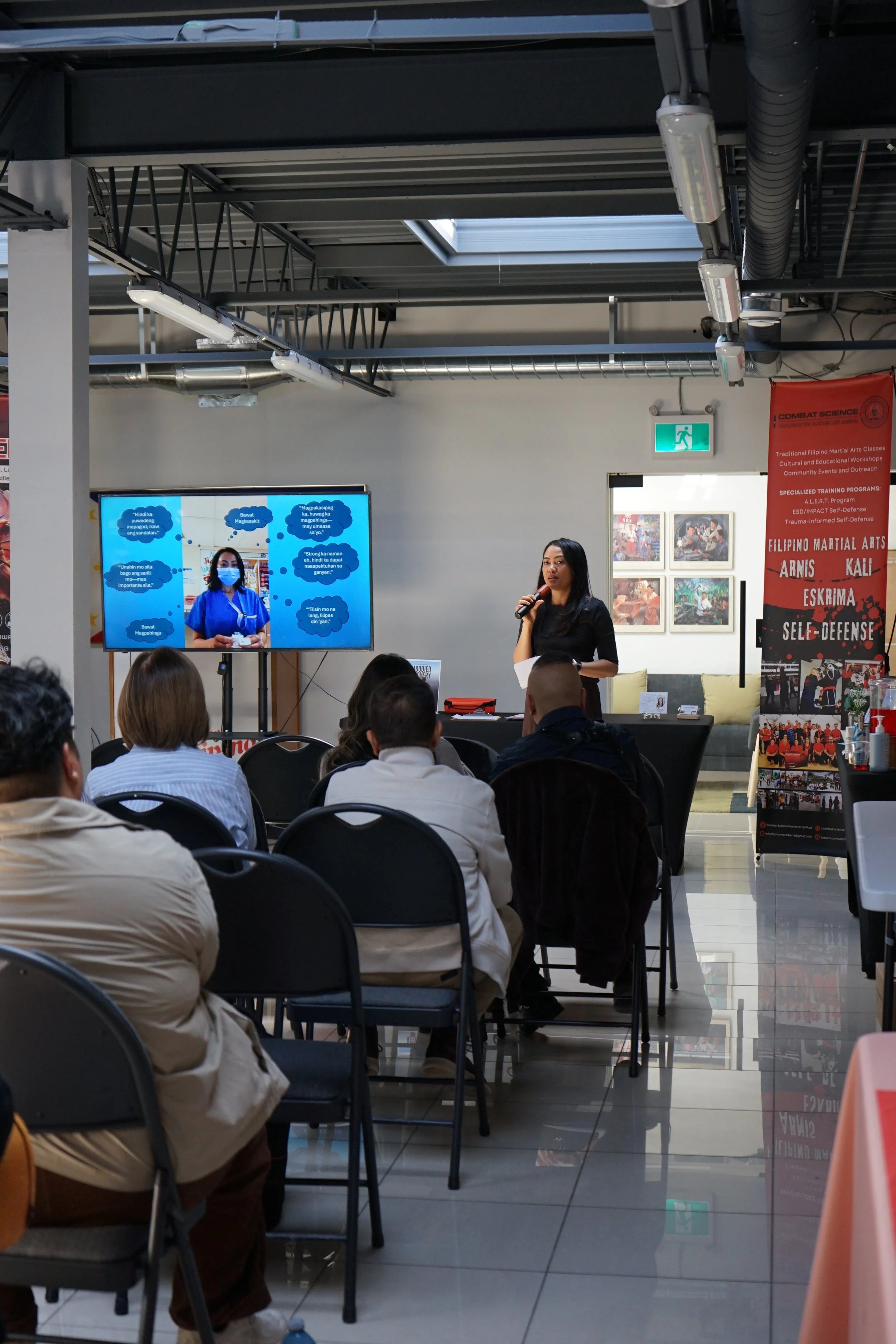
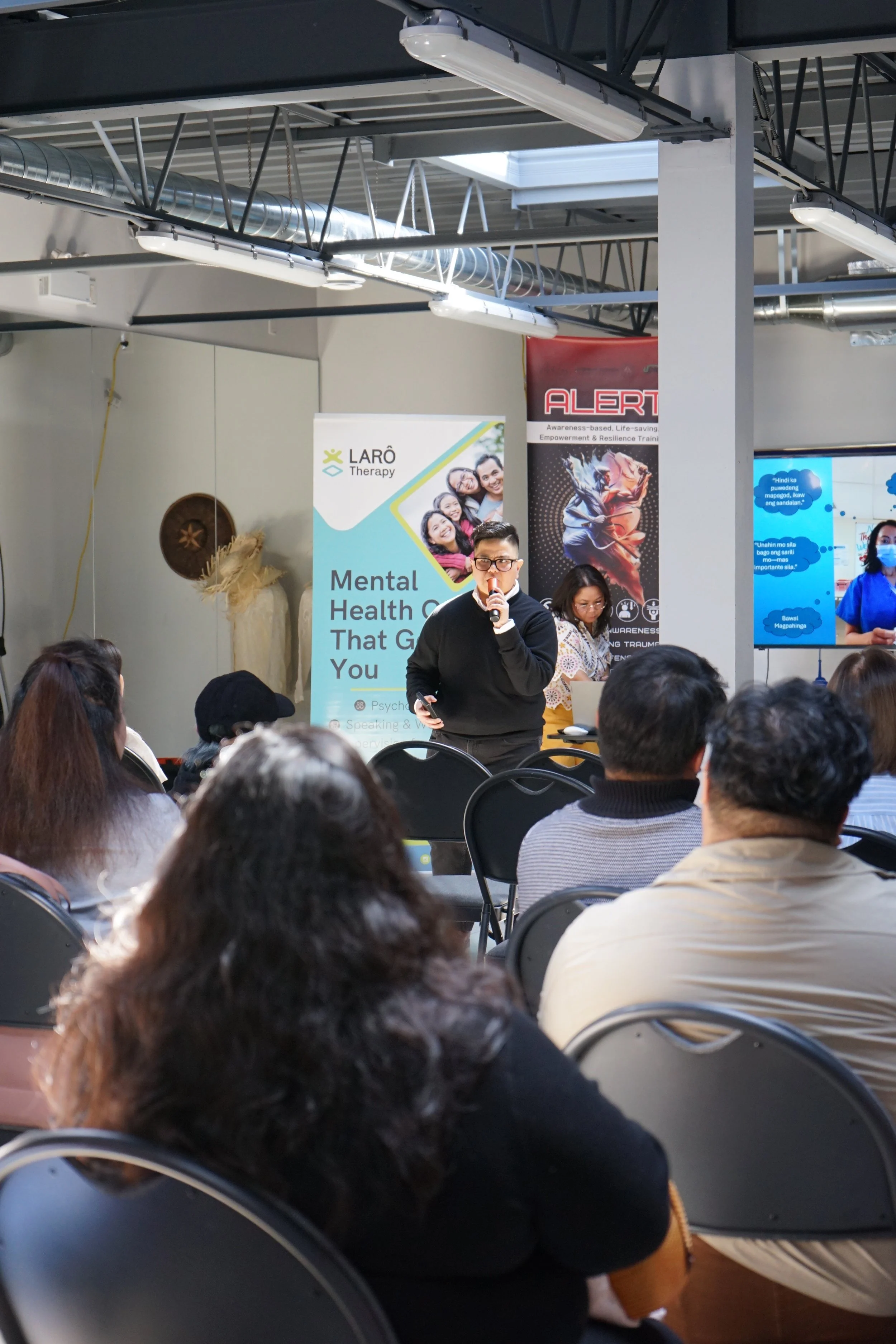
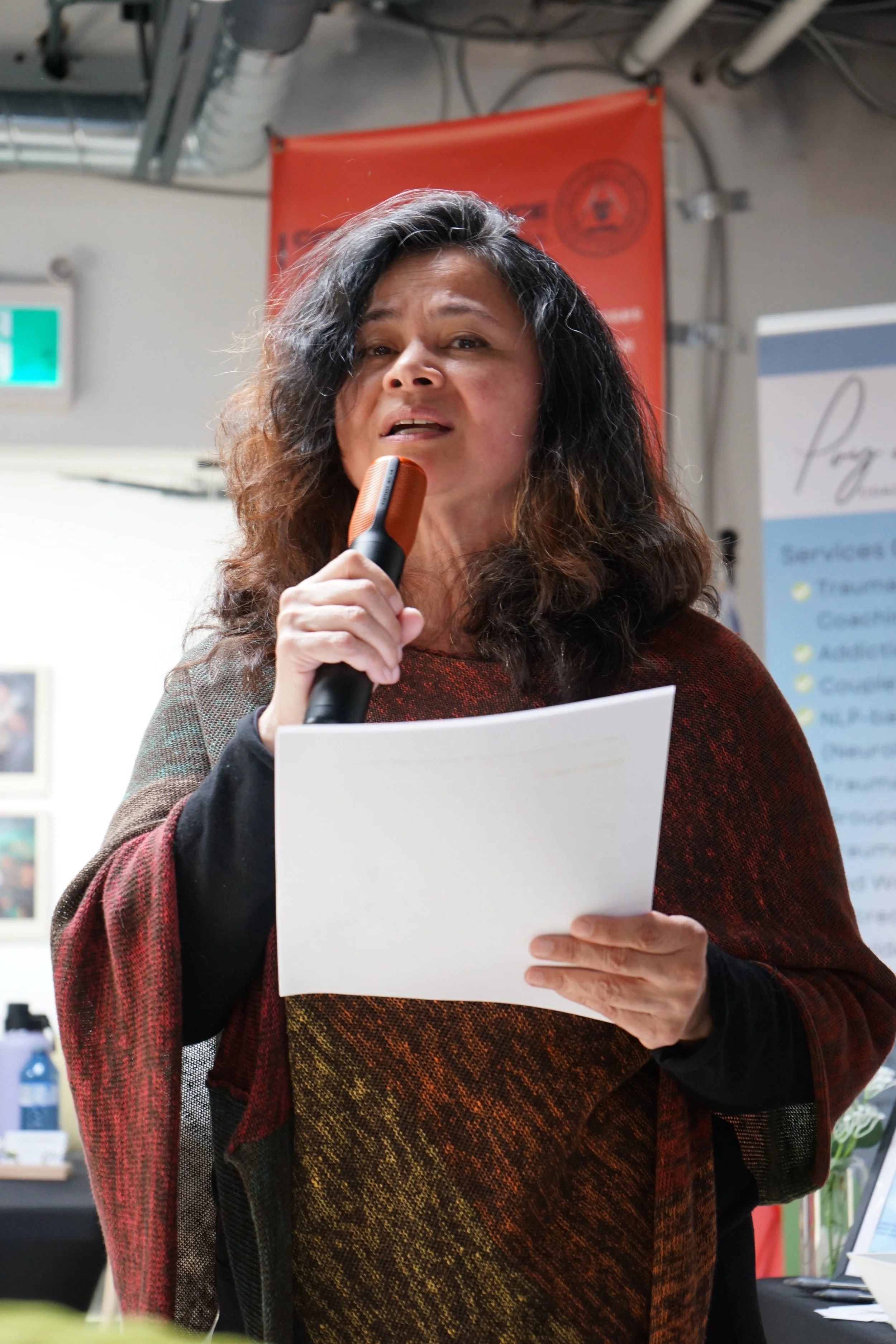
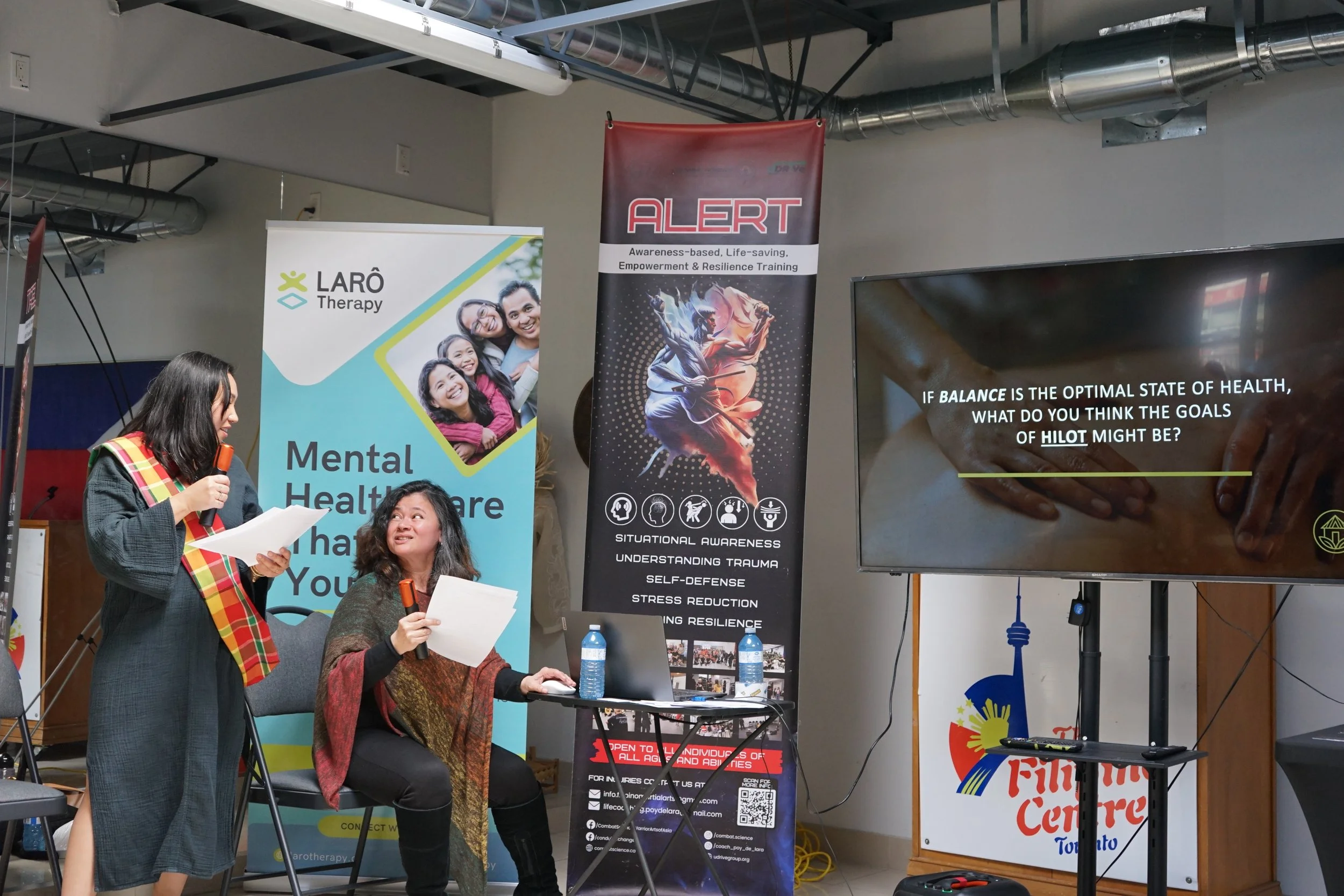
Coach Poy de Lara and I invited everyone to look at stress through a different lens.
Together, we explored how many Filipino caregivers and helping professionals have become disconnected from their own needs. This is not because they are weak, but because they have spent years adapting to demanding environments, family expectations, and caregiving roles. Through conversations about trauma responses, the nervous system, and our window of tolerance, we helped attendees understand that many of the behaviors we criticize in ourselves (overworking, people-pleasing, shutting down, or constantly staying busy) are often survival responses rather than personal failures.
Poy, a trauma specialist, coach, and consultant, brings years of experience supporting helping professionals, caregivers, and leaders around the world. As a registered psychotherapist and psychiatric emergency nurse, I drew from my experience working on the frontlines of mental health, where I witnessed how often helpers quietly carry their own burdens while caring for everyone else. Together, we offered a message that resonated deeply throughout the room: understanding our stress responses is not about fixing ourselves. It is about reconnecting with ourselves.
Healing the Healer
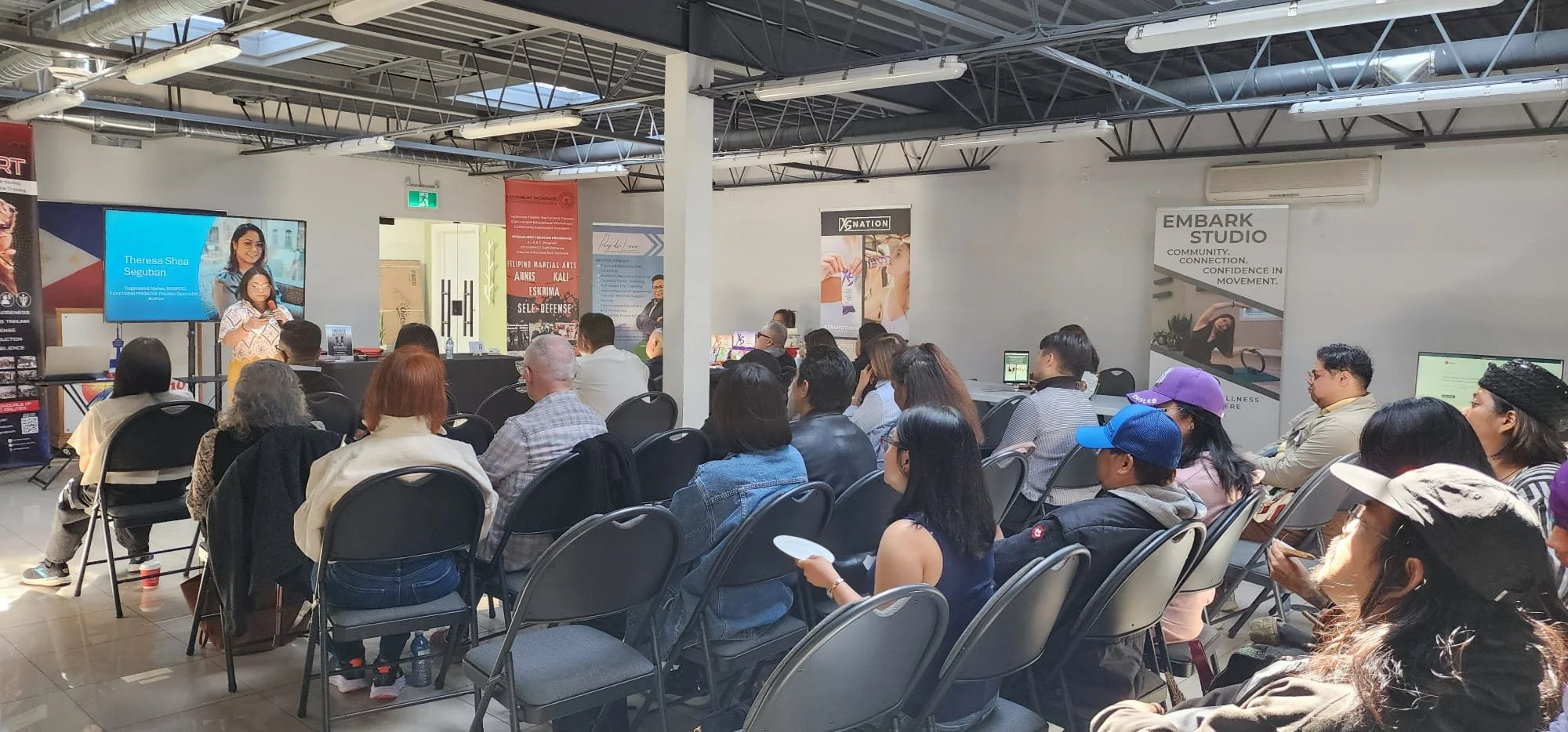
Theresa Shea Seguban, RN, shared a deeply personal reflection on grief, healing, and what it means to care for ourselves while caring for others.
Drawing from both her personal experience of loss and her work as a wound care nurse specialist, Shea invited participants to think about grief much like a wound. Some wounds are visible. Others are carried quietly beneath the surface. Through storytelling and her framework of holistic wellness, she reminded us that healing is not just physical, it involves movement, nutrition, rest, stress management, and creating the capacity to hold life's challenges.
As both a healthcare professional and wellness advocate, Shea's message resonated with many attendees who have spent years supporting others while neglecting their own healing.
Practicing Self-Compassion
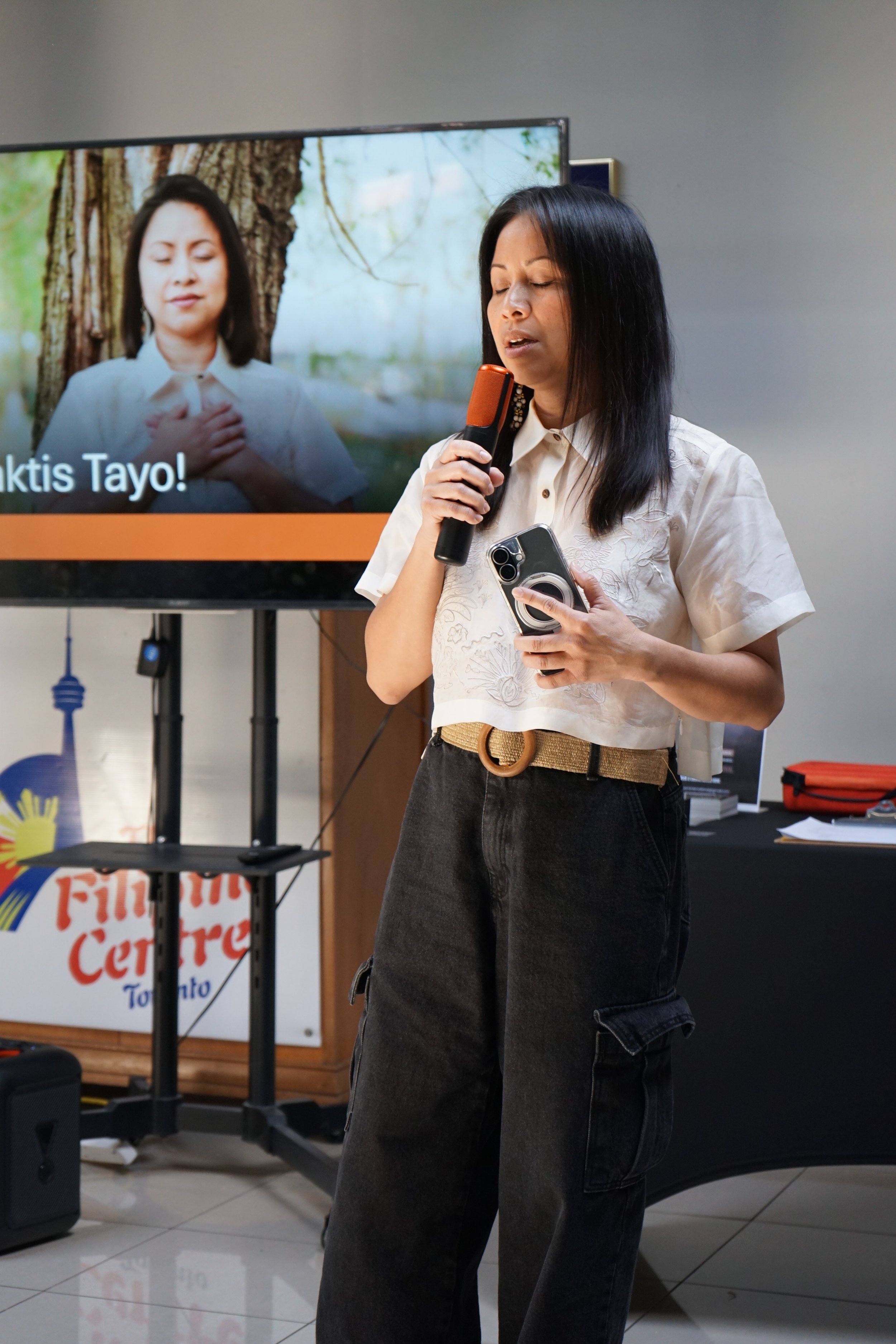
One of the gentlest moments of the afternoon came when Jaisa Sulit, OT, guided the audience through a mindful self-compassion practice.
As an occupational therapist, author, and educator, Jaisa shared parts of her own healing journey following a spinal cord injury that changed the course of her life. Her story invited participants to consider a simple but profound question: What if we spoke to ourselves with the same kindness we offer to others?
Through guided self-soothing and self-compassion exercises, she created a moment of stillness that many helping professionals rarely allow themselves. In a culture that often celebrates sacrifice and endurance, Jaisa reminded us that compassion toward ourselves is not selfish. It is necessary.
Remembering How to Play
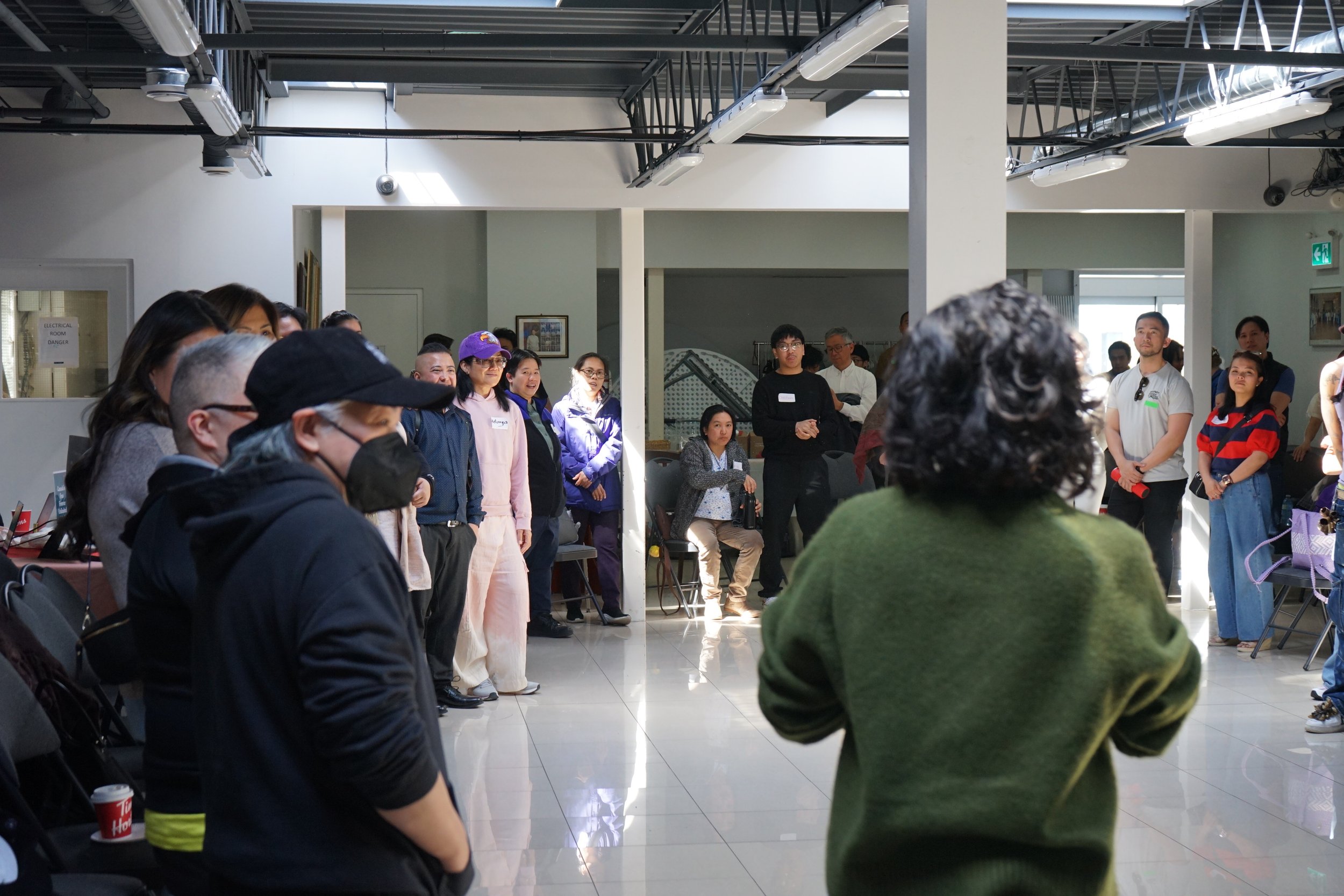
When Elda Almario, RP, invited everyone to stand up and move together, something shifted.
The room transformed from an audience into a community.
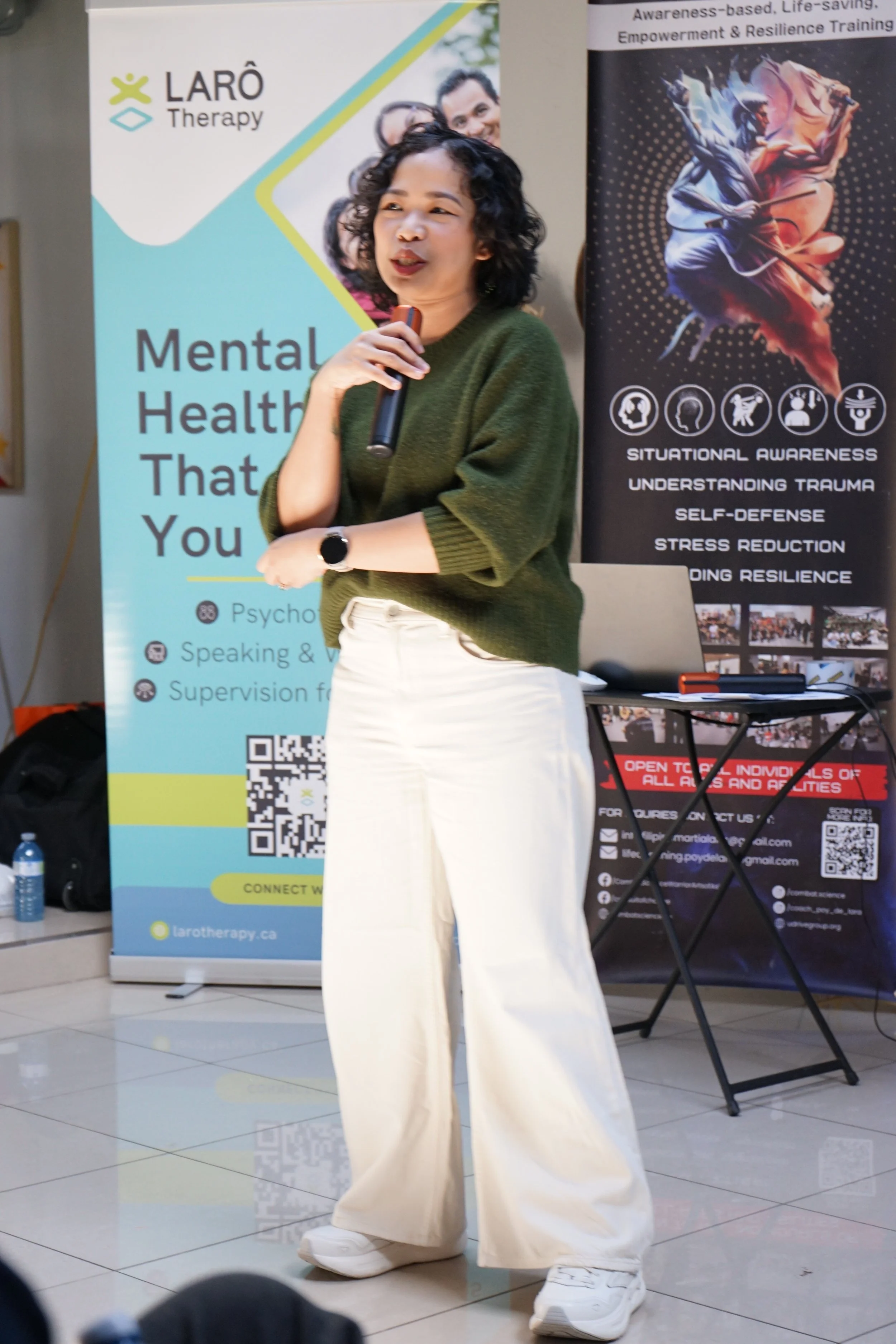
As a registered psychotherapist and founder of Larô Therapy, Elda believes that play is not something we outgrow. It is something many of us lose touch with. Through movement, laughter, and shared participation, she demonstrated how play can become a pathway back to connection, joy, and healing.
What might have looked like a simple dance activity was actually an invitation to reconnect with parts of ourselves that often get buried beneath responsibility and adulthood.
Returning to Ancestral Wisdom
Jen Maramba, Ancestral Healer, and Mary Hernandez, RP, offered a powerful reflection on Hilot and the role of Filipino Indigenous knowledge in healing.
Their presentation invited attendees to consider that wellness is not a new concept. It has existed within our communities for generations. Through stories of ancestral healing, cultural remembrance, and traditional practices, they highlighted how many of our healing traditions have been disrupted, forgotten, or pushed aside through migration and colonization.
As co-founders of Balay International Hilot Centre, both Jen and Mary bring together psychotherapy, somatic healing, cultural knowledge, and community care. Their contribution reminded us that healing can also involve remembering where we come from.
Embodying Strength
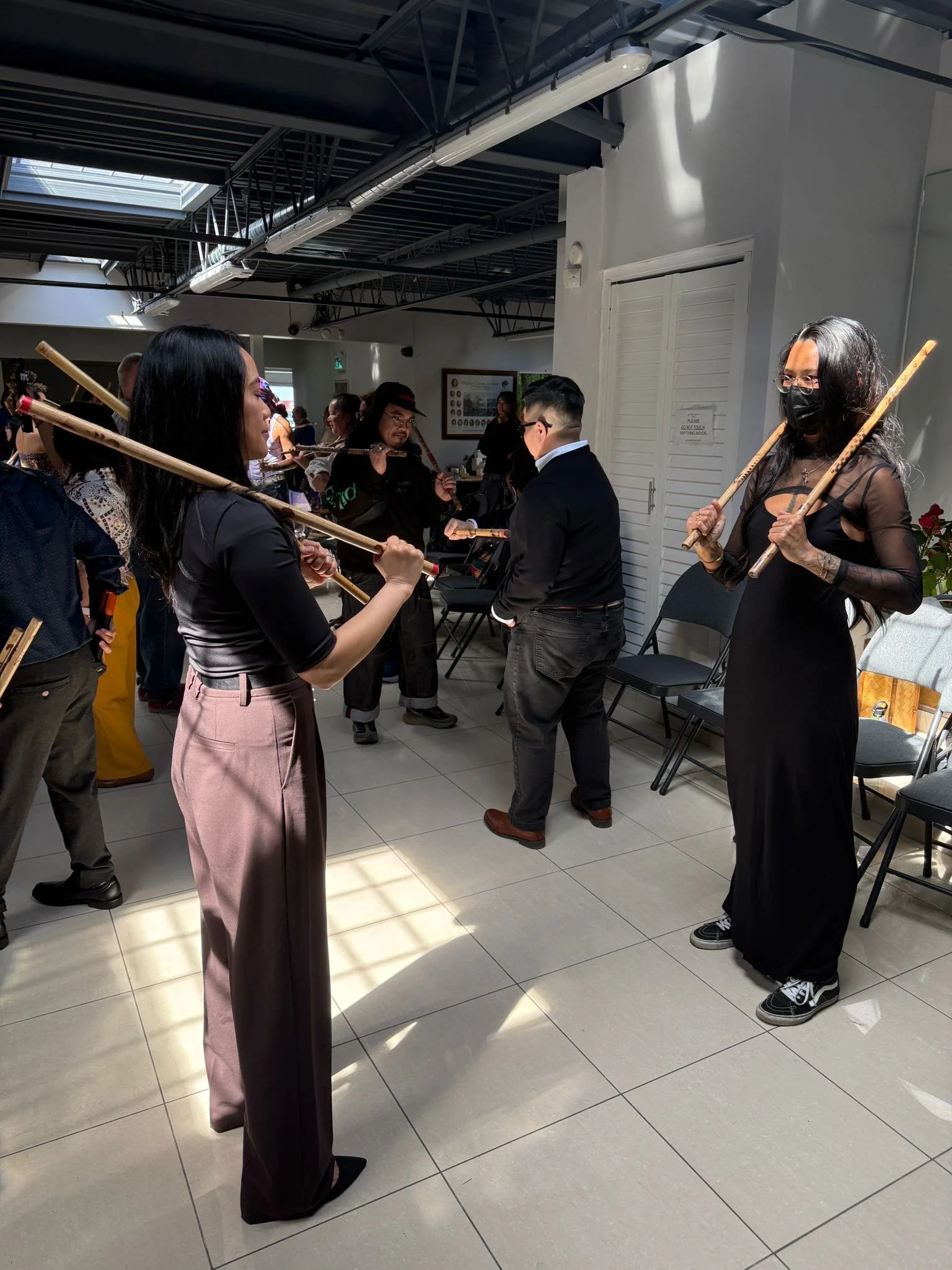
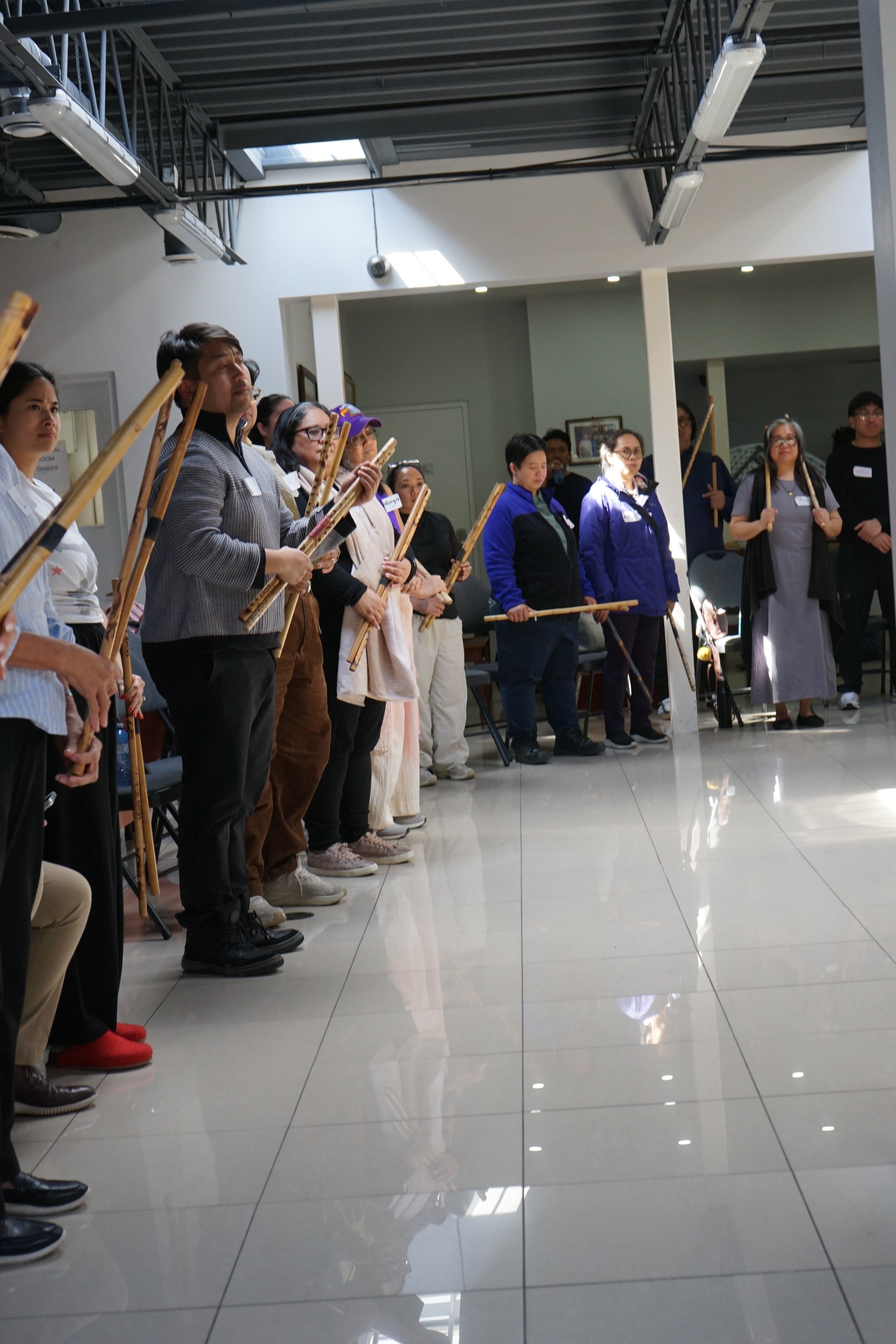
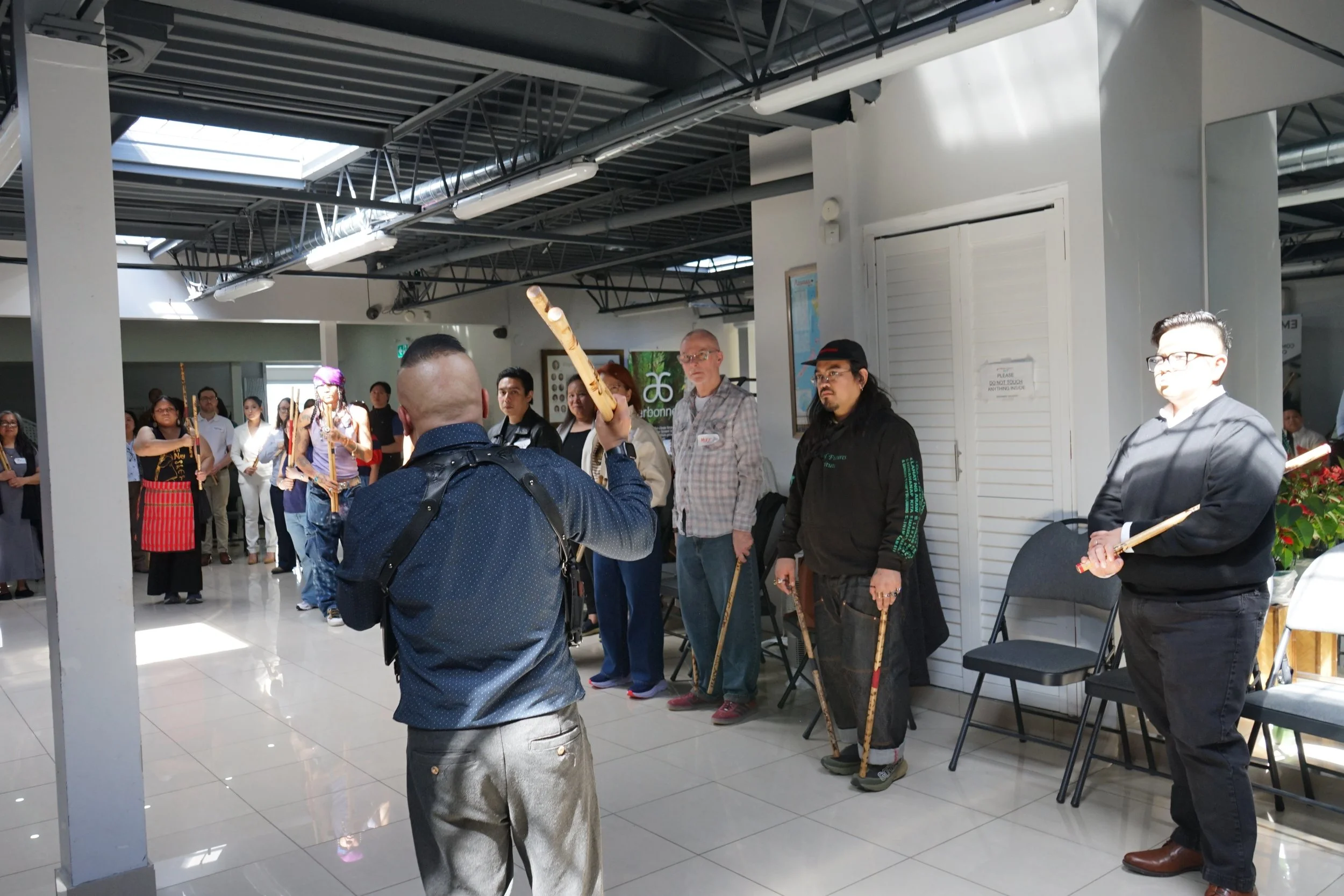
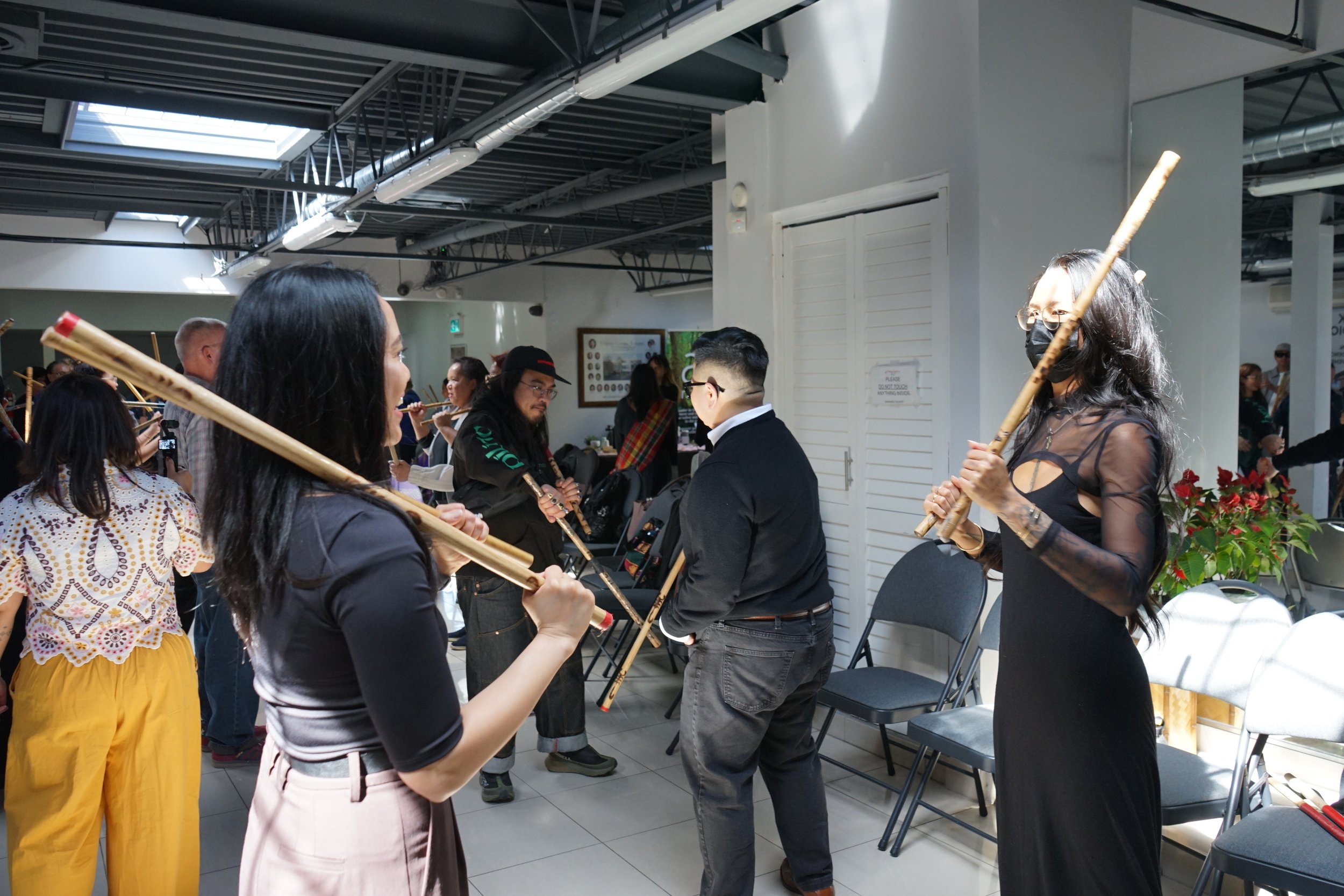
The afternoon concluded with movement led by Senior Master JB Ramos, Martial Arts Educator, who introduced participants to foundational concepts from Filipino Martial Arts.
For nearly 25 years, JB has dedicated himself to teaching Filipino Martial Arts around the world. What stood out during his session was not simply the techniques themselves, but the deeper lesson beneath them. Through movement, participants explored awareness, presence, confidence, and resilience. Not as abstract concepts, but as experiences felt within the body.
JB's work demonstrates that strength is not only physical. It is emotional, mental, cultural, and communal. His session served as a fitting reminder of one of SINAG's core messages: healing is not only something we think about, but it is something we embody.
It Wasn’t Just the Talks
Honestly, some of the most meaningful moments didn’t happen on stage.
They happened:
while standing in line for coffee
while browsing vendor tables
while talking to someone you just met
We had amazing local vendors, including Balay, Salaysay, Arbonne, Pippen, Embark Studio, and XS Nation. People really took their time connecting, asking questions, and just being present.
This Was Just the Beginning
Toward the end, we shared something important.
This event wasn’t meant to “fix” anything.
It wasn’t the full work.
It was the beginning.
We also introduced the SINAG Fall Immersion, happening November 13–15 at Countryside Camp, a deeper retreat where we’ll have more time and space to really explore this work together.
Details are still coming, but the intention is clear.
To create space for people who are used to holding everything together…
to finally put some of that down.
If You Left Feeling Something… That Matters
If you were there, you might have felt it.
And if you weren’t, you probably know the feeling we’re talking about.
Being the one who:
shows up
takes care of others
keeps things going
Even when you’re tired.
SINAG isn’t about taking that strength away.
It’s about asking:
What would it look like to be strong…
and supported?
To care for others…
without losing yourself?
If this resonates, stay connected.
We’ll be sharing more about the November retreat soon.
You don’t have to keep carrying everything the same way.