
Family Expectations, Masculinity, and Finding Your Own Identity
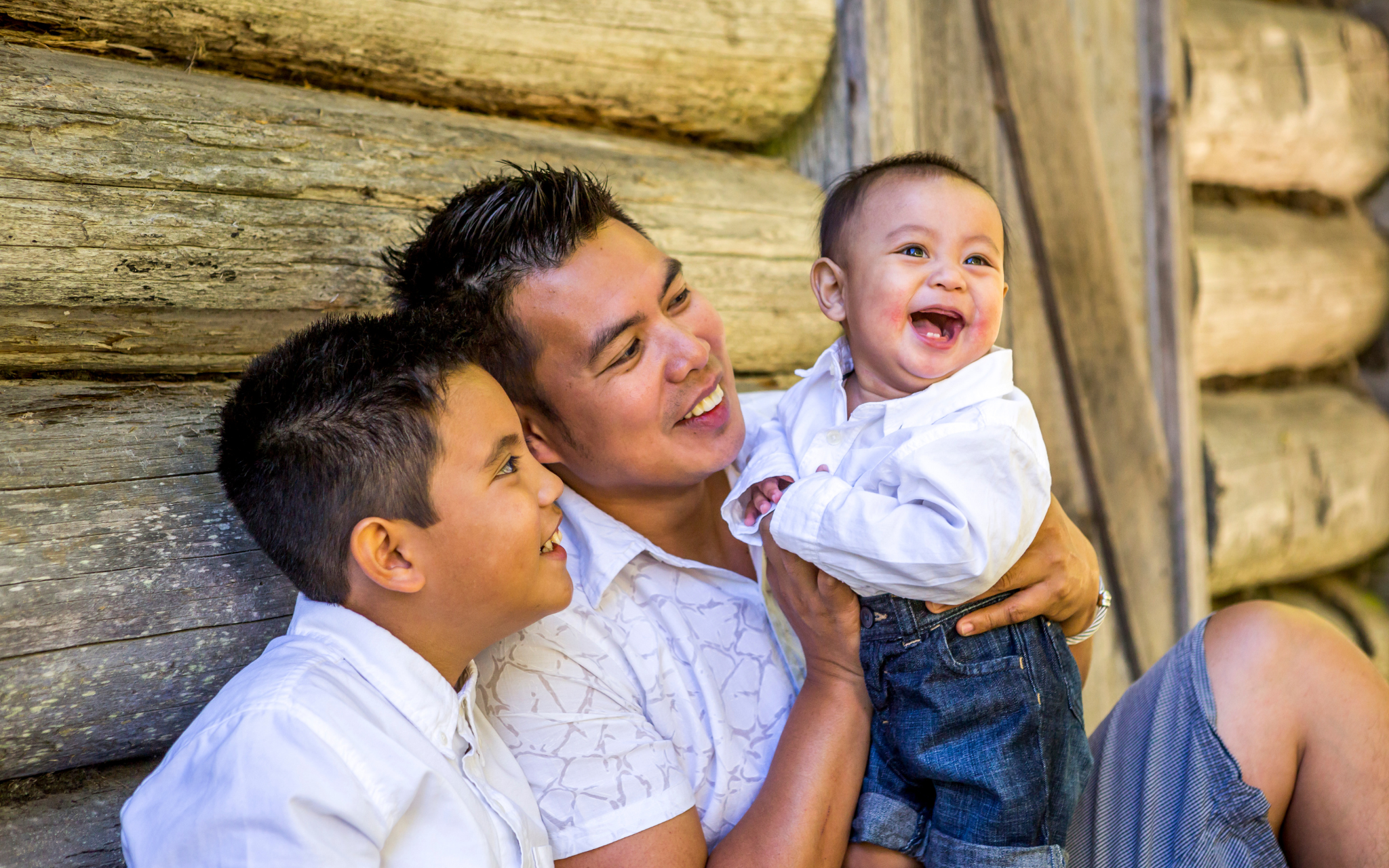
What happens when being a good son means putting everyone else's needs before your own? A reflection on Filipino family values, immigrant expectations, and learning to honour your family without losing yourself.
Growing up in a Filipino family in Toronto, I learned early on what it meant to be a good son.
Respect your parents. Help around the house. Listen to your elders. Work hard. Be grateful for the sacrifices made for you.
As the eldest son, I also understood that I had a responsibility to lead by example. I was expected to be dependable, make good decisions, and become someone my younger family members could look up to.
Making my parents proud wasn't just about personal achievement. It was also a way of showing appreciation for everything they had done. These values shaped my understanding of family, responsibility, and what it meant to be a man. They gave me a sense of belonging and helped me appreciate the importance of showing up for the people I love.
But as we grow older, some of the roles we learned to occupy within our families can become more complicated.
What happens when you want to make your parents proud, but their expectations don't quite align with the life you want?
What happens when you've become so accustomed to being the dependable one that you struggle to recognize when you need support yourself?
And how do you begin to make decisions for yourself when disappointing your family feels like letting them down?
For some Filipino-Canadian men, particularly those navigating both Filipino family values and Canadian cultural expectations around individuality, these questions can become an important part of understanding who we are.
When Being a Good Anak Becomes Part of Your Identity
In many Filipino families, responsibility extends beyond ourselves.
We're raised with values of respect, interconnectedness, and caring for one another. We learn that our choices can affect not only our own lives but also the people who have supported us along the way.
One concept that reflects this is utang na loob, often understood as a deep sense of gratitude and reciprocity toward those who have cared for us.
At its heart, utang na loob can be a meaningful expression of love and appreciation. It reminds us that our achievements rarely happen in isolation. Our parents, grandparents, and extended families may have made considerable sacrifices to create opportunities for us.
For children of immigrants, those sacrifices can feel especially significant.
Perhaps your parents left behind familiar communities, careers, or loved ones to build a different life in Canada. Perhaps you grew up hearing stories about the difficulties they endured or witnessed how hard they worked to provide for your family.
You may have developed a deep appreciation for those sacrifices. But sometimes, gratitude can begin to feel inseparable from obligation.
You might find yourself thinking:
"My parents sacrificed so much for me. How could I disappoint them?"
"I should help my family before thinking about myself."
"If I'm not successful, were all their sacrifices worth it?"
"I want to make my own decisions, but I don't want them to think I'm ungrateful."
Over time, being responsible, successful, and self-sacrificing can become closely connected to how we understand our worth. We may feel proud when our parents are proud. We may find genuine fulfillment in being someone our family can depend on. But we may also begin to feel exhausted, resentful, or uncertain about whether there's room for our own needs and aspirations.
The difficulty isn't necessarily that we care too much about our families. It's that we may have learned to experience caring for ourselves and caring for our families as competing responsibilities.
The Two Parts of You: The Good Son and the Person Who Wants His Own Life
Imagine a Filipino-Canadian man who has spent much of his adulthood being the responsible one.
He helps his parents financially when he can. He shows up when family members need him. He considers how his decisions might affect the people around him. And he genuinely values doing these things.
But he's also building a life of his own. He has a career, a relationship, personal goals, and responsibilities that require his time and attention.
Sometimes, these priorities come into conflict.
He wants to spend a weekend with his partner, but his family needs his help.
He wants to pursue a different career, but worries his parents will disapprove.
He wants to say no to a request, but feels guilty before he even responds.
When he chooses himself, he feels selfish. When he prioritizes his family, he sometimes feels resentful.
So where does that leave him?
One way we can understand this internal conflict is through Internal Family Systems (IFS), a therapeutic approach that explores how different parts of ourselves can hold different emotions, beliefs, needs, and motivations.
For example, one part of us might take pride in being the dependable son. This part values responsibility, loyalty, and making our family proud.
Another part might long for greater independence. It wants the freedom to make decisions, establish boundaries, and explore what a meaningful life looks like on our own terms.
Neither part is inherently wrong.
The responsible part may be trying to preserve connection, belonging, and a sense of being valued.
The independent part may be trying to protect our autonomy, individuality, and emotional well-being.
The difficulty arises when these parts seem to be working against one another.
We may feel caught between two important needs: the desire to belong and the desire to become our own person.
And when those needs feel incompatible, even ordinary decisions can carry a surprising amount of emotional weight.
When Being Dependable Means Keeping Your Feelings to Yourself
Alongside expectations around responsibility, many men also grow up receiving messages about how they should handle their emotions.
Be strong. Don't complain. Figure things out. Don't make your problems someone else's burden.
These messages aren't unique to Filipino families. They can be reinforced through friendships, school, workplaces, and broader expectations of masculinity.
In some households, love and care may also be expressed more through actions than emotional conversations.
A father might work long hours, provide financial stability, or make sure his children have what they need. These can be meaningful expressions of love.
At the same time, conversations about sadness, fear, insecurity, or emotional vulnerability may be less familiar.
As sons, we may come to associate being dependable with remaining composed and handling difficulties independently.
Over time, some men develop a seemingly nonchalant way of responding to their emotions.
"It's whatever."
"I'm fine."
"It's not that serious."
"I'll figure it out."
Sometimes, these responses genuinely reflect how we feel. Other times, they may help us distance ourselves from emotions that feel uncomfortable or difficult to express. From an IFS perspective, we might understand this as a protective part of ourselves. Perhaps this part learned that staying composed helped us avoid criticism, prevent conflict, or maintain the image of someone who could handle anything.
And for a long time, that approach may have served us well.
But the same strategies that helped us navigate earlier expectations can sometimes make it harder to recognize our emotional needs as adults.
We can become very good at appearing unaffected while struggling to understand what's happening underneath.
How These Expectations Can Follow Us Into Adult Relationships
The roles we learn within our families don't necessarily disappear when we become adults. They can continue shaping how we relate to romantic partners, friends, parents, and ourselves.
Here are a few ways these patterns might show up.
1. You're Always the Dependable One, but Struggle to Ask for Support
You might express love by providing, solving problems, or anticipating what other people need. You're the person who takes responsibility when something goes wrong. You show up for others, even when you're tired.
But when you're the one having a difficult time, asking for support feels uncomfortable. You might tell yourself:
"I should be able to handle this."
"Other people have bigger problems."
"I don't want to burden anyone."
Being dependable can be a meaningful strength. But when it's the only role we feel comfortable occupying, relationships can become emotionally one-sided.
We may become so accustomed to caring for others that receiving care feels unfamiliar.
2. You Avoid Conflict Because You Don't Want to Disappoint Anyone
In some Filipino families, maintaining harmony is highly valued.
The concept of pakikisama reflects the importance of getting along with others, maintaining relationships, and being considerate of the people around us.
These are valuable qualities.
But difficulties can arise when maintaining harmony means consistently setting aside our own needs. Perhaps you agree to things you don't really want to do. You avoid difficult conversations because you don't want to upset anyone. You tell yourself something isn't worth bringing up, even though it continues to bother you.
Eventually, those unexpressed frustrations may turn into resentment, irritability, or emotional distance.
What began as an attempt to preserve connection can unintentionally create disconnection.
3. You Withdraw When Conversations Become Emotionally Difficult
Imagine your partner tells you they've been feeling disconnected and want more emotional closeness.
You care about them. You want the relationship to work. But instead of knowing what to say, you feel overwhelmed.
You become quiet. You try to offer a practical solution.
Or you withdraw because you're worried that anything you say might make things worse.
From the outside, this might look like indifference. But internally, you may be experiencing fear, shame, inadequacy, or uncertainty about how to express yourself.
Perhaps a part of you worries:
"What if I'm not good enough?"
"What if I disappoint them?"
"What if I say the wrong thing?"
Withdrawal can sometimes function as a way of protecting ourselves from uncomfortable emotions. Unfortunately, what feels protective to one person can feel rejecting to the other. Over time, this can create a painful cycle in which one partner seeks connection while the other pulls away, leaving both feeling misunderstood.
4. You Feel Responsible for Everyone Else's Happiness
Perhaps one of the most difficult expectations to navigate is the feeling that you're responsible for keeping everyone happy.
Your parents have expectations. Your partner has needs. Your family depends on you.
And somewhere in the middle, you're trying to figure out what you need, too.
You might feel torn between helping your parents and prioritizing your relationship. Rather than seeing this as a situation where different needs can be discussed and negotiated, it can begin to feel like a test of loyalty.
If you prioritize your partner, are you being a bad son?
If you prioritize your parents, are you being an inadequate partner?
When disappointing someone feels like failing them, even setting a reasonable boundary can bring up guilt. And the more we try to prevent everyone else's disappointment, the easier it becomes to overlook our own needs.
The Expectations We Carry Across Generations
Many of the beliefs we carry about responsibility, success, and masculinity didn't develop in isolation.
They may have been shaped by the experiences of the generations before us.
In IFS, the term legacy burdens describes certain painful beliefs, fears, and emotional responsibilities that can be transmitted through families and broader social environments.
For some Filipino-Canadian men, these may be connected to migration, financial insecurity, family sacrifice, and cultural expectations about what it means to be a good son or a successful man.
We may carry messages such as:
"My worth comes from what I can provide."
"I should never become a burden to my family."
"I have to succeed because my parents sacrificed so much."
"Showing vulnerability means I'm weak."
"Putting myself first means I'm selfish."
It's worth considering where these messages came from.
Perhaps our parents grew up in circumstances where financial stability was uncertain. Perhaps expressing emotions wasn't encouraged in their families. Perhaps being responsible and self-sufficient helped them navigate difficult situations.
These ways of coping may have been important, even necessary, in their circumstances.
But what helped one generation survive doesn't always need to become an unquestioned expectation for the next. Sometimes, we continue carrying responsibilities and fears long after our circumstances have changed.
A part of us may still believe that saying no will threaten our relationships.
Another part may believe that expressing vulnerability will make us less worthy of respect.
Another may work tirelessly to prove that our parents' sacrifices were worthwhile.
Rather than criticizing these parts of ourselves, IFS encourages us to become curious about what they're trying to protect.
What are they afraid might happen if we stopped working so hard?
What would it mean to disappoint someone we love?
What if we could be valued for who we are, not only for what we accomplish or provide?
These questions can help us begin to understand the emotional weight behind patterns that may otherwise feel automatic.

Learning to Honour Our Families Without Abandoning Ourselves
Exploring these experiences doesn't mean rejecting Filipino culture, distancing ourselves from our families, or abandoning the values we grew up with. It also doesn't mean that responsibility, sacrifice, or caring for others are inherently unhealthy. These can be meaningful expressions of love, connection, and identity.
The question is whether we have room to make choices about how we live those values.
Can we help our families because we genuinely want to, rather than because we're afraid of what might happen if we don't?
Can we appreciate our parents' sacrifices without feeling that every decision must repay them?
Can we maintain close relationships while allowing ourselves to have different opinions, priorities, and aspirations?
In therapy, this work may involve becoming more aware of the different parts of ourselves that influence our decisions. We might explore the part that feels responsible for everyone's happiness.
The part that becomes anxious when someone is disappointed.
The part that avoids vulnerability.
And the part that longs for more independence but feels guilty for wanting it.
Instead of forcing these parts to change, we can begin by understanding why they developed and what they're trying to protect. For some men, this might mean becoming more comfortable expressing emotional needs in their relationships. For others, it might mean learning to set boundaries with family members, tolerate disagreement, or make decisions without constantly seeking approval.
And sometimes, it means recognizing that we can genuinely love making our parents proud while accepting that they may not agree with every choice we make.
These changes aren't always easy.
When our sense of identity has been closely connected to responsibility, loyalty, and self-sacrifice, doing something differently can feel uncomfortable, even when we know it's important. But discomfort doesn't necessarily mean we're doing something wrong. Sometimes, it means we're learning a different way of relating to ourselves and the people we love.
Being a Good Son Doesn't Have to Mean Losing Yourself
For many of us, being a good Filipino son has been a source of pride.
It has taught us to value family, appreciate sacrifice, and show up for the people who matter to us. Those values don't need to disappear as we grow into our own identities. But perhaps we can begin to make room for something else alongside them.
The freedom to have needs of our own.
The ability to express vulnerability without questioning our strength.
The understanding that disappointing someone doesn't automatically mean we've failed them.
And the possibility of building a life that honours both where we came from and who we're becoming.
We can be grateful for our parents' sacrifices without believing that our entire lives must be defined by sacrifice.
We can be dependable without having to carry everything alone. We can be good sons while still becoming our own people. Perhaps growing into our own understanding of masculinity isn't about choosing between family and independence. Perhaps it's about learning that responsibility and vulnerability can coexist, that love doesn't always require self-neglect, and that becoming our own person doesn't mean forgetting where we came from.
A Moment for Reflection
If parts of this article resonated with you, consider reflecting on these questions:
Growing up, what did being a "good son" mean in your family?
When you make important decisions, whose expectations do you find yourself considering?
Are there responsibilities you continue carrying because they reflect your values, or because you're afraid of disappointing someone?
What might it look like to honour your family while making more room for your own needs?
You don't need to have the answers right away. Sometimes, becoming curious about these patterns is a meaningful place to begin.
Finding Support as a Filipino-Canadian Man
Navigating family expectations, cultural identity, and emotional well-being can be complicated, particularly when you've spent much of your life being the person others depend on.
Therapy can offer a space to explore these experiences without having to choose between your cultural values and your individual needs.
At Growth Psychotherapy, we recognize that our relationships with ourselves are shaped by our families, communities, cultural experiences, and the expectations we've learned to carry.
Kurt, a Filipino-Canadian Registered Psychotherapist, supports adults navigating anxiety, overthinking, stress, identity, and belonging. His approach offers space to better understand familiar patterns, explore competing expectations, and develop ways of relating to yourself and others that feel more aligned with who you are. Learn more about Kurt here.
If you're interested in exploring these experiences, we welcome you to book a complimentary consultation.
This article is intended for psychoeducation and reflection. It does not suggest that all Filipino families or Filipino-Canadian men share the same experiences, and it is not a substitute for individualized mental health care.